Every so often a piece of writing lands that quietly punctures a lot of noise. LinkedIn News Europe trending conversation is all about AI in spatial planning, and the opening observation is the kind of thing that should make anyone selling AI transformation pause. A municipal urban planner recently left a comment about how they review spatial plans and project documentation for a living, and the plans look "virtually identical" to those from a few years ago. Despite all the attention, nothing visible has changed in the documents themselves.
That is a useful data point. When someone who spends their working week reading the actual artefacts of a discipline tells you the artefacts have not changed, it is worth listening before rushing to the next vendor demo.
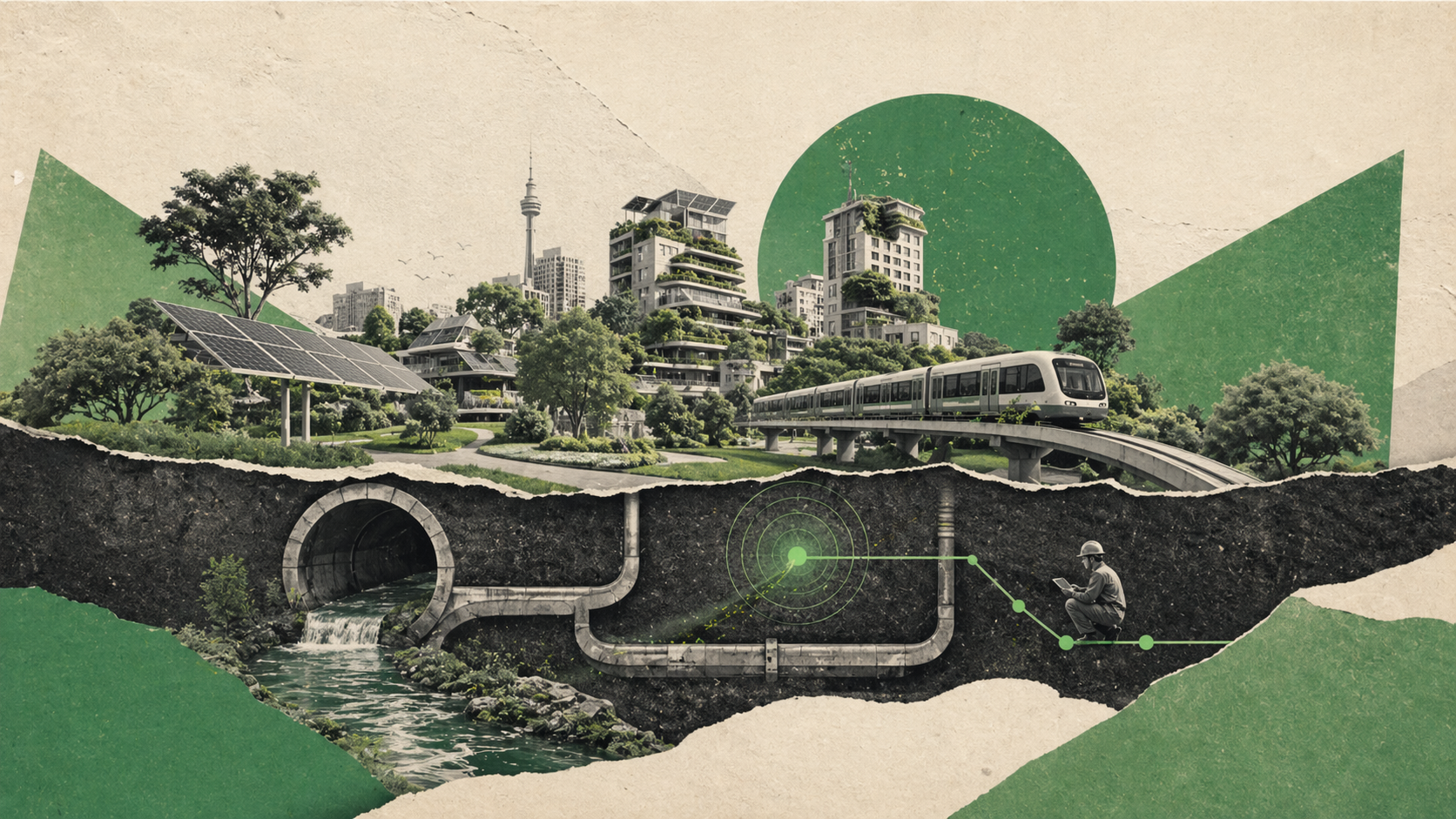
The author's argument is not that AI is useless in their field. It is that the interesting action is happening somewhere other than where the hype has been pointing. The real shift, they suggest, will show up in the maintenance and renewal of public utility infrastructure: predicting failures and wear, optimising interventions, managing water, energy and transport networks, and supporting investment priorities. In practice, a move from reactive to proactive management of the systems that quietly keep cities alive.
I want to sit with that for a moment, because it rhymes with something I see repeatedly in the organisations I work with. Leaders keep asking where AI will transform their flagship work, their big strategy documents, their headline products. And the honest answer is often: probably not there, not yet, and not in the way you are imagining. The place AI tends to earn its keep first is in the unglamorous middle of the operation. The maintenance layer. The part nobody puts on a conference slide.
There is a second thread in the piece that I think is even more interesting. There is a quiet return of skills that are not new at all. Maintenance. Repair. Long-term infrastructure stewardship. The kind of work that has been undervalued for decades while everyone chased the new build. AI does not replace these skills. It enhances them. The future in this domain, they argue, is a combination of good planning, quality construction, effective maintenance, and thoughtful use of technology across the whole process.
This is where the "green skills converge with AI" story gets real, and it is very different from the usual framing. The sustainability gain is not a dashboard. It is fewer burst water mains, fewer emergency roadworks, longer asset lives, and better decisions about where to spend constrained public money. None of that is photogenic. All of it matters.
For senior leaders reading this in a different sector, the transferable lesson is blunt. Before you ask what AI can do for your most visible work, ask what it can do for the work that keeps your most visible work possible. The pipes, the rotas, the ageing kit, the institutional knowledge sitting in three people's heads. That is usually where anticipation beats reaction by an order of magnitude, and where a modest, well-scoped AI capability pays back many times over.
It also reframes the skills conversation. If the value is moving toward anticipation, stewardship and judgement about priorities, then the people who understand the physical or operational reality of a system are not being displaced by AI. They are being made more valuable by it. The scarce resource is someone who can interpret a prediction, weigh it against context the model cannot see, and make a decision that holds up to scrutiny when something eventually goes wrong. Machines can machine. People still have to people, and people who have maintained something for twenty years know things a model will not learn from a spreadsheet.
So here is the concrete thing worth doing this week: Pick one system in your organisation that only gets attention when it breaks. Ask two questions about it. What would change if you could anticipate the next failure instead of reacting to it? And who in your team holds the judgement that would turn that prediction into a good decision? Start there. It is less exciting than a transformation programme, and considerably more likely to work.
.png?width=783&height=479&name=BBE%20Logo%20Teal%20Background%20(1).png "Bykov-Brett Logo")
 Jamie Bykov-Brett
·
22 April 2026
·
4 min read
Jamie Bykov-Brett
·
22 April 2026
·
4 min read