.png?width=783&height=479&name=BBE%20Logo%20Teal%20Background%20(1).png "Bykov-Brett Logo")
 Jamie Bykov-Brett
·
15 August 2023
·
9 min read
Jamie Bykov-Brett
·
15 August 2023
·
9 min read
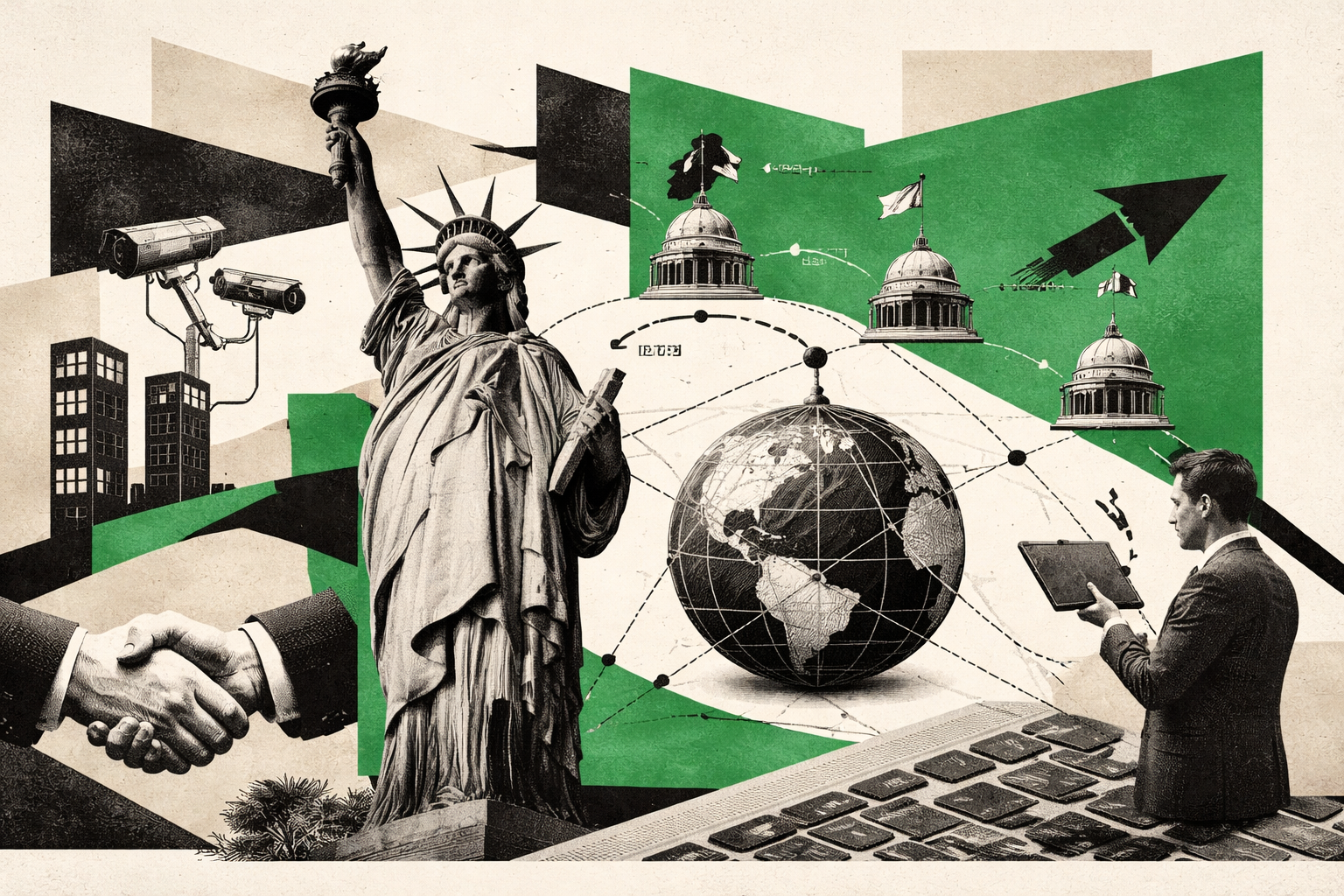
Few science fiction novels probe the intersection of technology, society, and governance as sharply as Neal Stephenson's "The Diamond Age." Set against a backdrop where traditional nation-states have crumbled, replaced by a mosaic of tribes or "phyles" bound by shared values, the novel introduces a revolutionary concept: the Distributed Republic.
The evolution of governance: understanding the Distributed Republic in "The Diamond Age"
The Distributed Republic is the key inspiration behind a themed community called 'Distributed Republic', a society focused on sharing knowledge about cutting-edge technologies such as Web3, AI, and the Metaverse. These avant-garde technologies are converging to build an infrastructure that could make Distributed Republics a practical reality.
What exactly is a Distributed Republic, and how does it differ from the governmental structures we are familiar with? This article delves into its foundations, implications, and potential real-world applications, whether you are a fan of Stephenson's work, a political science enthusiast, or simply curious about the future of governance in a decentralised world.

What is a Distributed Republic?
A Distributed Republic is a decentralised system of governance where power and decision-making are spread across a network of individuals or entities, rather than concentrated in a central authority. It operates on the principle that individuals, equipped with the right information and tools, can make decisions that benefit both themselves and the community at large.
Traditional republics rely on elected representatives to make decisions on citizens' behalf. Democracies emphasise direct public participation, but still within a centralised framework. Both systems depend on a central governing body to oversee and implement decisions, the Distributed Republic does not.
Instead of a top-down approach, it champions a bottom-up system. Every individual or node in the network has a say, and decisions emerge from consensus or collective agreement. Structures are fluid, adaptable, and often self-organised, with technology, particularly blockchain and decentralised ledgers, facilitating the process.
This decentralisation of power reduces the risk of corruption, allows for greater adaptability without bureaucratic delays, and places trust in the collective wisdom of the community. It is not just a political system, it is a paradigm shift in how we perceive governance.
Key features of a Distributed Republic
The Distributed Republic has four distinct characteristics that set it apart from traditional governance and reveal both its strengths and its challenges.
- Voluntary association. Unlike nation-states where citizenship is determined by birth or residency, members actively choose which republic they belong to, based on shared values and ideologies. This prioritises ideological alignment over geographical coincidence, ensuring members are genuinely invested in the republic's ethos.
- Fluid borders. The borders of a Distributed Republic are defined by shared digital spaces and networks, not mountains, rivers, or political treaties. Members may be scattered across the globe yet remain deeply connected through digital platforms.
- Decentralised justice. Traditional courts and hierarchical structures are replaced by peer-based dispute resolution mechanisms, where conflicts are resolved through consensus or predefined algorithms. This ensures swift, unbiased resolution and minimises the influence of power dynamics or corruption.
- Personal responsibility and self-governance. The system trusts members to govern themselves effectively when given the right tools and information. Members are not passive recipients of governance but active participants in shaping their republic, with autonomy comes accountability.
These features reflect a system that values choice, adaptability, and individual agency, one that recognises the power of shared values to bind decentralised communities together.
Advantages of a Distributed Republic
The Distributed Republic offers a fresh perspective on governance that aligns with the evolving digital landscape. Its core advantages are:
- Greater personal freedom and choice. Voluntary association means individuals align with communities that reflect their values, not an accident of birth or geography. This respects individual freedoms in ways that traditional nation-states often cannot.
- Reduced potential for centralised corruption. Dispersing power across a network minimises the ability of any single entity to wield disproportionate influence, reducing the avenues for systemic corruption that centralised systems invite.
- Flexibility and adaptability. Decisions emerge from consensus rather than being handed down from above, allowing the republic to adapt swiftly to technological change or shifts in societal values, without bureaucratic delay.
- Enhanced resilience. Decentralised networks have no single point of failure. Even if one node faces disruption, the overall system continues to function, a critical advantage in an increasingly unpredictable world.
Challenges and criticisms of a Distributed Republic
No system is without its pitfalls. The Distributed Republic presents real challenges that must be understood for any serious assessment of its viability.
- Difficulties in large-scale coordination. Decentralised systems can struggle when unified action is required, disaster response or infrastructure development, for example. Without a central coordinating entity, inefficiencies and delays are a genuine risk.
- Risk of digital divides and inequalities. The model relies heavily on digital platforms and networks. Those without access to digital tools or the skills to use them may find themselves marginalised, creating power imbalances where the technologically fluent hold disproportionate sway.
- Security and external threats. Without a centralised security apparatus, the republic may struggle to defend against coordinated external attacks, whether cyber threats or other forms of aggression. Reliance on digital platforms also raises concerns about data privacy and misuse of personal information.
- Echo chambers and lack of diverse viewpoints. Voluntary association based on shared values can produce communities where dissenting views rarely surface. This homogeneity risks stifling innovation, reinforcing bias, and undermining the healthy discourse that any society needs to grow.
These criticisms do not negate the model's potential, but they highlight areas requiring careful consideration before the Distributed Republic can transition from theoretical construct to practical reality.

The role of technology in a Distributed Republic
Technology is not merely an enabler for the Distributed Republic, it is fundamental to its operation. Three areas are especially significant.
- Secure, decentralised digital networks. Blockchain technology provides a transparent and immutable ledger, recording transactions and decisions without a central authority. This fosters trust among members, ensures power is not concentrated in a single entity, and protects against external threats.
- Nanotechnology and resource distribution. Nanotechnology, a hallmark of "The Diamond Age," revolutionises how resources are accessed and distributed. By manipulating matter at the molecular level, it promises a world where scarcity is no longer the norm, resources synthesised and distributed based on need rather than controlled by a central authority.
- Education and information dissemination. Advanced learning platforms tailored to individual needs ensure members can participate actively in governance. Decentralised information platforms prevent knowledge from being gatekept, fostering continuous learning and enabling the informed decision-making that a bottom-up system demands.
Real-world implications and potential of a Distributed Republic
The principles underpinning the Distributed Republic are not purely fictional, decentralised digital currencies, peer-to-peer networks, and online communities that transcend geographical boundaries already demonstrate them. A full transition may be ambitious, but elements of the model could be integrated into existing systems to offer greater inclusivity, flexibility, and individual agency.
Transitioning from established nation-states to a Distributed Republic presents significant challenges. Cultural, political, and economic inertia will resist such a shift. There is also the risk that transition exacerbates existing inequalities, and that the dissolution of traditional governance structures creates power vacuums, giving rise to conflict or exploitation.
Stephenson's novel offers clear lessons for contemporary society: it underscores the importance of adaptability in governance, demonstrates the value of individual agency and decentralised networks in fostering genuine community engagement, and serves as a cautionary tale about the ethical considerations required when shaping unchecked technological advancement.

Envisioning the future with the Distributed Republic
The Distributed Republic is more than a fictional construct, it is a response to the limitations of traditional governance and a vision of a future that values individual agency, decentralisation, and adaptability. In a world where technology continues to blur the lines between the physical and the virtual, it offers a model that resonates with where we are heading.
It is both an inspiration and a cautionary tale. Decentralised systems can foster genuine community engagement and respect individual choice, but the risks of echo chambers and digital divides are real. The concept challenges us to rethink the foundations of governance and envision a future where power is truly democratised.
Engage with this concept. Debate its merits and limitations, and consider its practical applications. The Distributed Republic offers a canvas for envisioning what governance in the digital age could look like, and it is a compelling starting point. If you want to explore further, join the Distributed Republic community.
Jamie Bykov-Brett
Listed as one of Engatica's World's Top 200 Business and Technology Innovators, Jamie is an AI and automation consultant who helps organisations move from curiosity to confident daily use. As founder of Bykov-Brett Enterprises and co-founder of the Executive AI Institute, he designs AI upskilling programmes that have delivered 86% daily adoption rates and a 9.7/10 NPS. His work sits at the intersection of technology implementation and human development, with a focus on responsible governance, practical tooling, and making AI accessible to every level of an organisation.
Get AI Insights Delivered
Practical perspectives on AI adoption and the future of work. No spam.