When a government's top lawyers step into a courtroom to defend a private company against its own neighbours, that is worth a closer look.
That is what happened in Mississippi. The US Justice Department filed a motion to step into a civil lawsuit and have it thrown out, arguing that the facility at the centre of the case is critical to the economy and the US military. The facility is a data centre owned by xAI, Elon Musk's artificial intelligence company.
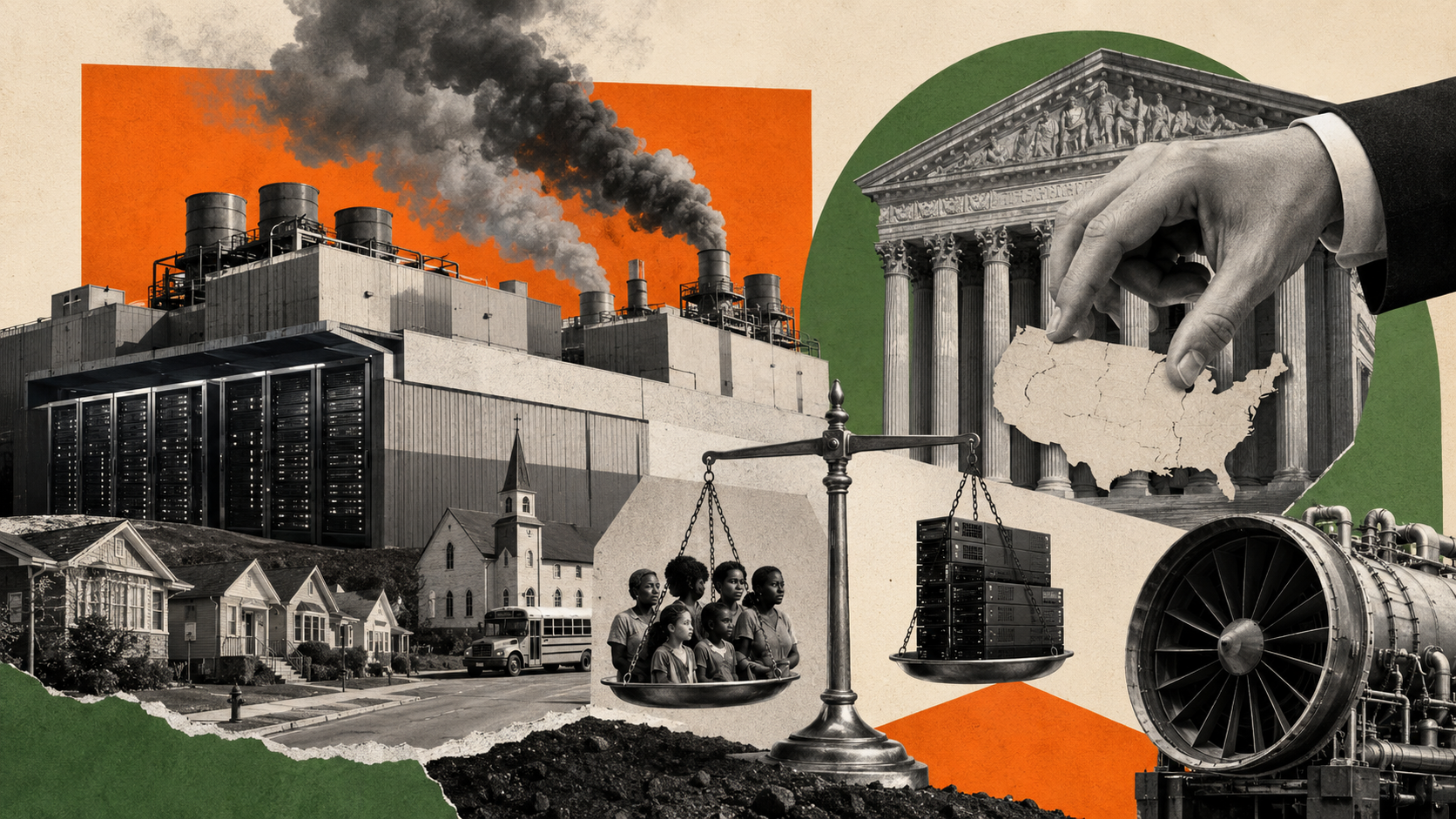
Here is the plain version of what a data centre actually is. It is a large building full of computers that run AI systems. Those computers need enormous amounts of electricity. xAI's $20 billion site near Memphis is being powered, in part, by dozens of portable natural gas turbines, which are essentially industrial engines that burn gas to make power. The NAACP and environmental groups filed suit in April, alleging that xAI ran those turbines without the air permits the federal Clean Air Act requires, near homes, schools and churches.
So you have two stories sitting on top of each other. One is about the future of AI. The other is about who breathes the air next to the machines that make it possible. The lawyers from Earthjustice, who represent the NAACP, called the data centre and its emissions something that is turning communities into "sacrifice zones". That is a hard phrase, and it deserves to be sat with rather than smoothed over.
I spend a lot of my time helping leaders think clearly about AI without getting swept up in the hype or the fear. This story is a useful corrective for anyone who imagines AI as something clean and weightless that lives "in the cloud". There is no cloud. There are buildings, turbines, water, land and people. Every prompt you type and every model your organisation deploys runs on physical infrastructure somewhere, and that somewhere has neighbours.
If you sit on a leadership team in healthcare, energy, financial services or any organisation with a sustainability commitment, this raises a question you may not have asked yet. What do you actually know about the compute powering your AI tools? Where is it, how is it powered, and who carries the cost of that power? It is entirely possible to publish a carbon pledge on one page of your annual report while quietly buying AI capacity that runs on unpermitted gas turbines somewhere you will never visit. That is not a hypothetical gap. It is a governance blind spot, and blind spots are where reputational damage grows.
There is a second signal here, and it is about the rules themselves. The state of Mississippi decided no permit was required, and the federal Justice Department argued that enforcing the law belongs to the executive branch, not to private groups.
Whatever you make of the legal merits, the framing tells you something. US enforcement is being shaped by industrial policy and national security priorities as much as by environmental ones. If your organisation benchmarks its governance standards against the United States, that is a moving target, and you should treat it as one.
This is where my discomfort with technology-first thinking becomes practical rather than philosophical. The argument being made is that the data centre is too important to slow down. Maybe it is important. But "important" is not the same as "exempt", and once we accept that powerful enough technology can outrank the rules meant to protect people, we have changed something about how power works. The interesting decisions in AI are rarely about the models. They are about who benefits, who is harmed, and who gets a say.
You do not need to solve American energy policy to act on this. You can ask your own suppliers a short list of honest questions and write the answers down. Where does our AI compute run? How is it powered? What environmental permits and community impacts sit behind it? If your vendors cannot answer, that silence is itself the answer. The leaders who come out of the next few years with their credibility intact will be the ones who treated the infrastructure behind their AI as their responsibility, not someone else's footnote.
Frequently Asked Questions
What is the xAI Mississippi data centre lawsuit actually about?
The lawsuit alleges that xAI ran dozens of natural gas turbines to power its Memphis-area AI data centre without the air permits required by the federal Clean Air Act. The NAACP and environmental groups, represented by Earthjustice and the Southern Environmental Law Center, say this created health risks for nearby homes, schools and churches. The US Justice Department has moved to intervene and dismiss the case.
Why is the US Justice Department defending a private company?
The Justice Department argued that the data centre is critical to the economy and the US military, and that enforcing federal law is the job of the executive branch rather than private groups. The motion reflects a broader stance that treats AI infrastructure as a national security and industrial priority. Critics, including Earthjustice, describe it instead as shielding a wealthy company from pollution rules.
Does AI really have a physical environmental footprint?
Yes. AI runs on data centres, which are large buildings full of computers that consume significant electricity and often water for cooling. Powering them can mean burning natural gas or drawing heavily on local grids. The idea of an invisible "cloud" hides the fact that every AI model relies on physical infrastructure with real environmental and community consequences.
What should leaders ask about the AI tools they buy?
Ask where your AI compute physically runs, how it is powered, and what environmental permits and community impacts sit behind it. These questions expose whether your sustainability commitments match the infrastructure behind your AI. If suppliers cannot answer clearly, treat that silence as a warning sign rather than a minor detail, because it points to a governance blind spot.
How does this affect organisations outside the United States?
It signals that US environmental enforcement may increasingly bend to industrial policy and national security priorities rather than environmental ones. Any organisation that benchmarks its governance standards against the United States should treat that as a shifting baseline. It also reinforces the need to assess the environmental impact of AI infrastructure independently, rather than assuming local regulation guarantees responsible practice.
.png?width=783&height=479&name=BBE%20Logo%20Teal%20Background%20(1).png "Bykov-Brett Logo")
 Jamie Bykov-Brett
·
24 June 2026
·
6 min read
Jamie Bykov-Brett
·
24 June 2026
·
6 min read