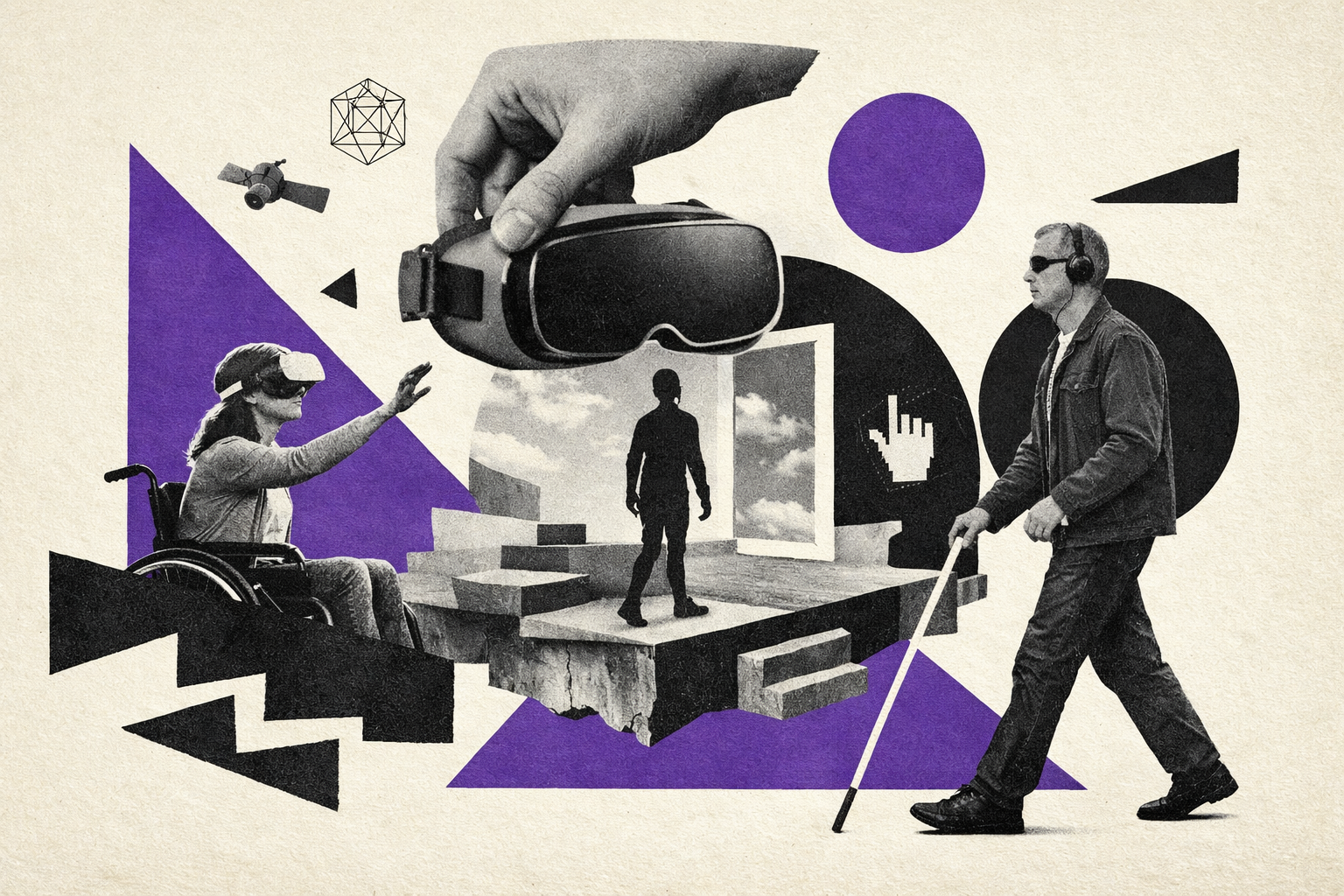
Extended reality (XR), from virtual reality games to augmented reality workspaces, has genuine transformative potential. But making that potential accessible to everyone requires a fundamental shift in how we approach XR design and development: from 'disability' to 'disablement'.
What 'disablement' actually means
'Disablement' holds that it's not health conditions or physical impairments that disable people, it's the barriers in society and the environment. A wheelchair user isn't disabled by their wheelchair; they're disabled by buildings without ramps or lifts. Someone who is visually impaired isn't limited by their sight, they're limited by a world that fails to provide adequate alternatives to visual information.
The opportunity XR presents
XR gives us the chance to build entire worlds unconstrained by concrete, bricks, or the laws of physics. That's a genuine opportunity to design out the societal and environmental barriers that cause disablement. We can create XR experiences that everyone can access, whatever their abilities.
Putting it into practice
The most effective place to start is with user interfaces, make them adjustable to each person's needs, and integrate XR with assistive technologies like screen readers or speech recognition software. Beyond that, there are several concrete areas to address:
- Visual adjustments: text size, colour contrast, and audio descriptions for those with visual impairments
- Language: multilingual support in both text and audio
- Identity: full avatar customisation so users can express their unique identities
- Navigation: solutions like virtual guide dogs or teleportation points to make movement straightforward
- Sensory inputs: adjustable light and sound levels to suit individual sensitivities
Fixing the environment, not the individual
Shifting from 'disability' to 'disablement' means focusing less on 'fixing' individuals and more on fixing the environment, in this case, making XR products as inclusive and accessible as possible. The true magic of XR isn't just in creating new realities, it's in making those realities inclusive for everyone.
.png?width=783&height=479&name=BBE%20Logo%20Teal%20Background%20(1).png "Bykov-Brett Logo")
 Jamie Bykov-Brett
·
12 June 2023
·
2 min read
Jamie Bykov-Brett
·
12 June 2023
·
2 min read