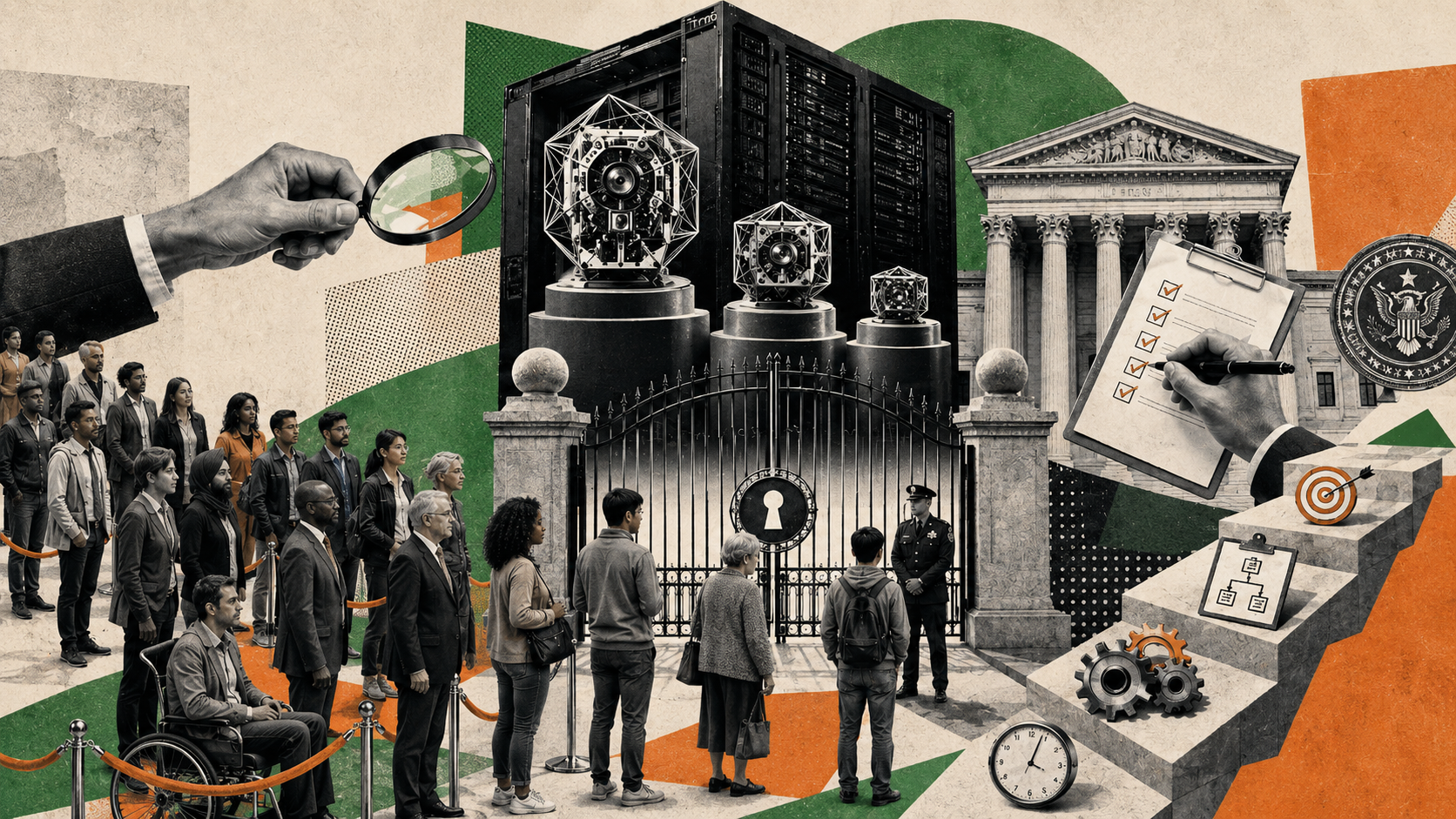
When a company builds the most capable version of a product it has ever made, you would expect it to want as many paying customers as possible. OpenAI has done the opposite. Its newest models are going to roughly 20 organisations to start with, and the company is fairly open about why: it shared the models and release plans with the U.S. government first, and is "starting with a limited preview for a small group of trusted partners" at the government's request.
That is the real story. The model is interesting. Who gets to touch it is more interesting, and for anyone planning around this technology, it is the part that actually changes your decisions.
Here is the quick version of what was announced. GPT-5.6 comes in three flavours.
→ Sol is the heavyweight, built for hard problems like long coding sessions and security work.
→ Terra is the workhorse for high-volume business tasks such as customer support and document analysis.
→ Luna is the cheap, fast one for everyday jobs like drafting and summarising.
The pricing is tiered to match: Sol costs more, Luna costs least, with Terra in the middle. (Pricing is quoted "per million tokens", a token being roughly a chunk of a word, so it is essentially a meter on how much text the model reads and writes.)
The tiering matters for a practical reason. If your team built its cost projections on a single price for "the OpenAI model", that assumption is now out of date. You are budgeting against a menu, not a flat rate, and the temptation will be to reach for the top tier when the middle one would do.
Most organisations I work with overspend not because the tools are expensive but because nobody asked which job actually needs the expensive model.
Now back to the access question, because this is the genuinely new thing.
The staggered rollout follows an executive order issued on 2 June 2026 that asks federal agencies to build a process for checking new AI models before wide release. That review was meant to take 30 days, which lands the broader launch around early July. OpenAI is coordinating its release with the White House rather than simply switching the models on for paying customers.
It is worth understanding why this is happening now. The same report notes the U.S. government took the drastic step of issuing an export control order against Anthropic, OpenAI's main rival, over jailbreaks found in one of its most powerful public models. So the gating is not theatre. There is a real recent example of a frontier model being pulled because it could be pushed into doing things it should not. Government-coordinated previews are the response.
If you are a leader trying to plan, three things follow from this.
First, your timeline is no longer fully in your hands. You cannot sign an enterprise agreement and start testing on day one. Access now depends partly on whether your sector and your organisation count as a "trusted partner", and nobody has published a clear definition of what that requires. Worth asking your vendor relationship lead to find out what that status actually involves and whether you qualify.
Second, the bottleneck is shifting from capability to readiness. When everyone eventually gets the same models, the advantage will not come from access. It will come from the organisations that already know which tasks to point them at, that have trained their people, and that can measure whether the thing is saving real hours rather than generating impressive demos. I have watched a six-month upskilling programme move a group of non-technical staff to daily AI use and save them a few hours each per week. None of that came from having the newest model. It came from knowing what to do with the one they had.
Third, plan for a world where safety review is a permanent feature, not a one-off. Real-time interventions and compliance parameters are now part of the deal. That is not a reason to wait. It is a reason to get your own house in order while the queue is still forming.
The newest model is not the prize. The capability to deploy it well is. One thing to do this week: write down the five tasks in your organisation you would hand to a model tomorrow, and rank them by hours saved, not by how clever they sound. If you cannot fill that list, the model was never your blocker.
Frequently Asked Questions
What are the GPT-5.6 Sol, Terra and Luna models?
They are three variants of OpenAI's GPT-5.6 family, each tuned for a different job. Sol handles the hardest work like complex coding and security research, Terra is built for high-volume business tasks such as customer support and document analysis, and Luna is the fast, low-cost option for everyday jobs like drafting and summarising.
Why can't my organisation access GPT-5.6 yet?
Because OpenAI is releasing it first to roughly 20 trusted partners after sharing the models with the U.S. government. The limited preview follows a June 2026 executive order asking federal agencies to assess new AI models before wide release, with a broader launch planned for the weeks after that review concludes.
How is GPT-5.6 priced across the three models?
It uses tiered pricing by capability, charged per million tokens of text the model reads and writes. Sol is the most expensive at the top tier, Luna is the cheapest, and Terra sits in the middle. The practical effect is that you are now budgeting against a menu of prices rather than one flat rate.
What does "trusted partner" status actually require?
There is no published definition yet, which is the problem for planners. Access currently depends on whether your organisation and sector are included in the government-coordinated preview. The sensible move is to ask your vendor relationship lead what the status involves and whether your sector is likely to qualify.
How should leaders prepare while access is restricted?
Focus on readiness rather than waiting for the model. Identify the specific tasks worth handing to AI, rank them by hours saved, train your people, and put measurement in place so you can prove real value. When everyone eventually gets the same models, the advantage will come from knowing how to deploy them, not from access.
.png?width=783&height=479&name=BBE%20Logo%20Teal%20Background%20(1).png "Bykov-Brett Logo")
 Jamie Bykov-Brett
·
30 June 2026
·
6 min read
Jamie Bykov-Brett
·
30 June 2026
·
6 min read