.png?width=783&height=479&name=BBE%20Logo%20Teal%20Background%20(1).png "Bykov-Brett Logo")
 Jamie Bykov-Brett
·
26 January 2023
·
4 min read
Jamie Bykov-Brett
·
26 January 2023
·
4 min read
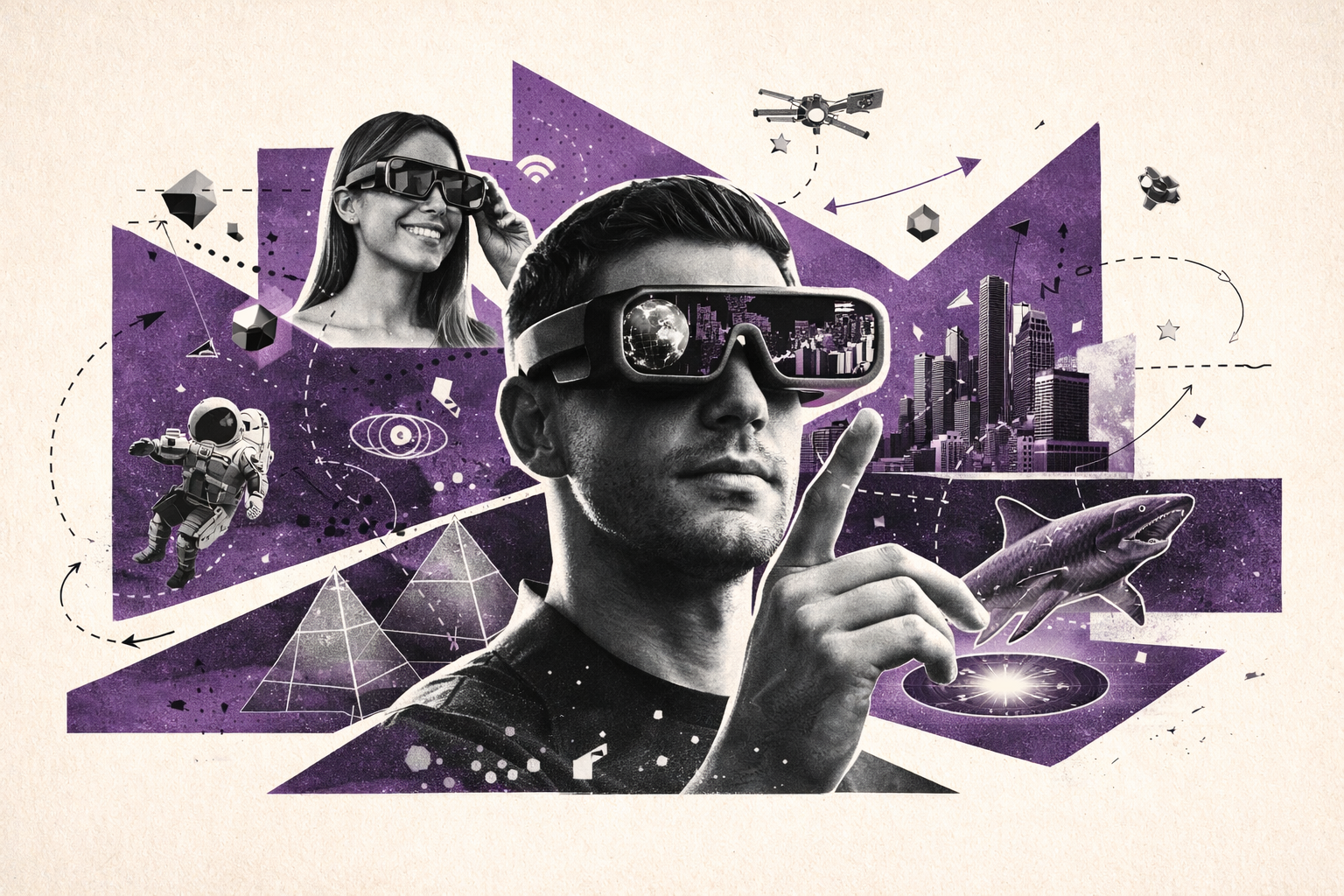
Google Glass was a highly anticipated product intended to revolutionise the way we interact with technology. Despite its potential, it failed to catch on with consumers and was eventually discontinued, at least for public sale.
Few people are aware that it remains in common use in the manufacturing sector, offering a hands-free, heads-up display that is genuinely useful. The latest version, Google Glass Enterprise 2, was released at the end of last year.
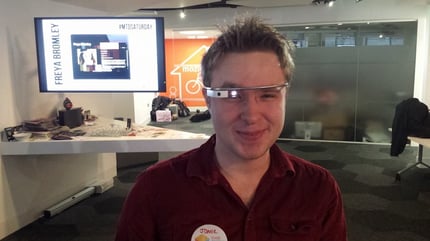
I donned Google Glass at the end of 2013, prior to its public release the following year. Even then, I was fascinated by the dawn of the AR revolution, even if, for a long time, it appeared to be its early sunset.
This article sets out the reasons Google Glass failed and why the conditions now exist for AR eyewear to overtake mobile phones as our primary portable devices.
Why Google Glass failed
Several factors contributed to Google Glass's commercial failure, privacy concerns, a lack of clear use case, and significant technical limitations.
The most damaging was social. People worried about being photographed without their knowledge or consent, a concern amplified by the device's prominence on the face. Glass users were quickly labelled "glassholes," and the device became a source of social stigma.
What has changed
Society has grown accustomed to being constantly photographed, by CCTV cameras and the ubiquitous mobile phone alike. The privacy concerns that once plagued Google Glass carry far less weight today. The rise of 5G networks has also made it possible to deliver the seamless, responsive user experience that the original Glass device could not.
The case for AR eyewear
We are almost a decade on from the unceremonious launch of Google Glass, so why is the rise of AR eyewear inevitable?
The integration of AI, 5G networks, and edge computing will allow AR eyewear to deliver a genuinely immersive and interactive experience, providing real-time data on weather, traffic, and news in a far more convenient form than the mobile phone.
The hands-free design is a significant advantage. Users can access information without looking down at a screen, making AR eyewear safer and more practical on the move. Advanced sensors, cameras and microphones, will also enable more natural, intuitive interactions with the virtual world. Google Glass made you look like part of Star Trek's 'Borg Collective'; today's AR eyewear is considerably more subtle.
AR eyewear also excels at delivering context-aware information. Walking through a city, you might see details about buildings and landmarks overlaid directly in your field of view, or real-time translations when travelling in a foreign country. These experiences offer a richer, more engaging way to explore the world around you.
Business applications
AR eyewear will create new opportunities for remote collaboration, training, and customer engagement across the business world. The impact will be felt across several sectors:
- Construction, manufacturing, and healthcare, workers can access real-time information and collaborate with remote teams, improving efficiency and productivity.
- Retail, AR eyewear delivers a more engaging and personalised shopping experience, allowing customers to view products in a virtual showroom.
- Customer service, customers can remotely access a representative to help with a purchase or answer questions.
The metaverse connection
A significant driver of AR eyewear adoption over the next five to ten years will be the emergence of the metaverse, a virtual world where users interact with one another and with digital objects in an immersive, seamless way. As the boundaries between our virtual and material worlds continue to erode, the metaverse is expected to become a major platform for social interaction, entertainment, and commerce. This will create substantial demand for AR eyewear, enabling users to move between digital and material realms seamlessly.
AR eyewear will serve as the portal through which users access the augmented metaverse, seeing and hearing the digital world in a manner that closely mirrors the real one. As the metaverse becomes more deeply integrated into daily life, more people will turn to AR eyewear as their means of access, driving it towards mainstream adoption in the near future.
The road ahead
Google Glass failed to live up to its potential, but that failure is instructive rather than definitive. It highlighted the importance of addressing privacy concerns, establishing a clear use case, and having the necessary technical infrastructure in place.
With those lessons absorbed, the future of AR looks genuinely bright, and it may well replace the mobile phone as our primary window into the digital world.
Jamie Bykov-Brett
Listed as one of Engatica's World's Top 200 Business and Technology Innovators, Jamie is an AI and automation consultant who helps organisations move from curiosity to confident daily use. As founder of Bykov-Brett Enterprises and co-founder of the Executive AI Institute, he designs AI upskilling programmes that have delivered 86% daily adoption rates and a 9.7/10 NPS. His work sits at the intersection of technology implementation and human development, with a focus on responsible governance, practical tooling, and making AI accessible to every level of an organisation.
Get AI Insights Delivered
Practical perspectives on AI adoption and the future of work. No spam.