.png?width=783&height=479&name=BBE%20Logo%20Teal%20Background%20(1).png "Bykov-Brett Logo")
Who Benefits When the US Pushes Hands-Off AI Regulation at the G-20
 Jamie Bykov-Brett
·
4 September 2026
·
15 min read
Jamie Bykov-Brett
·
4 September 2026
·
15 min read
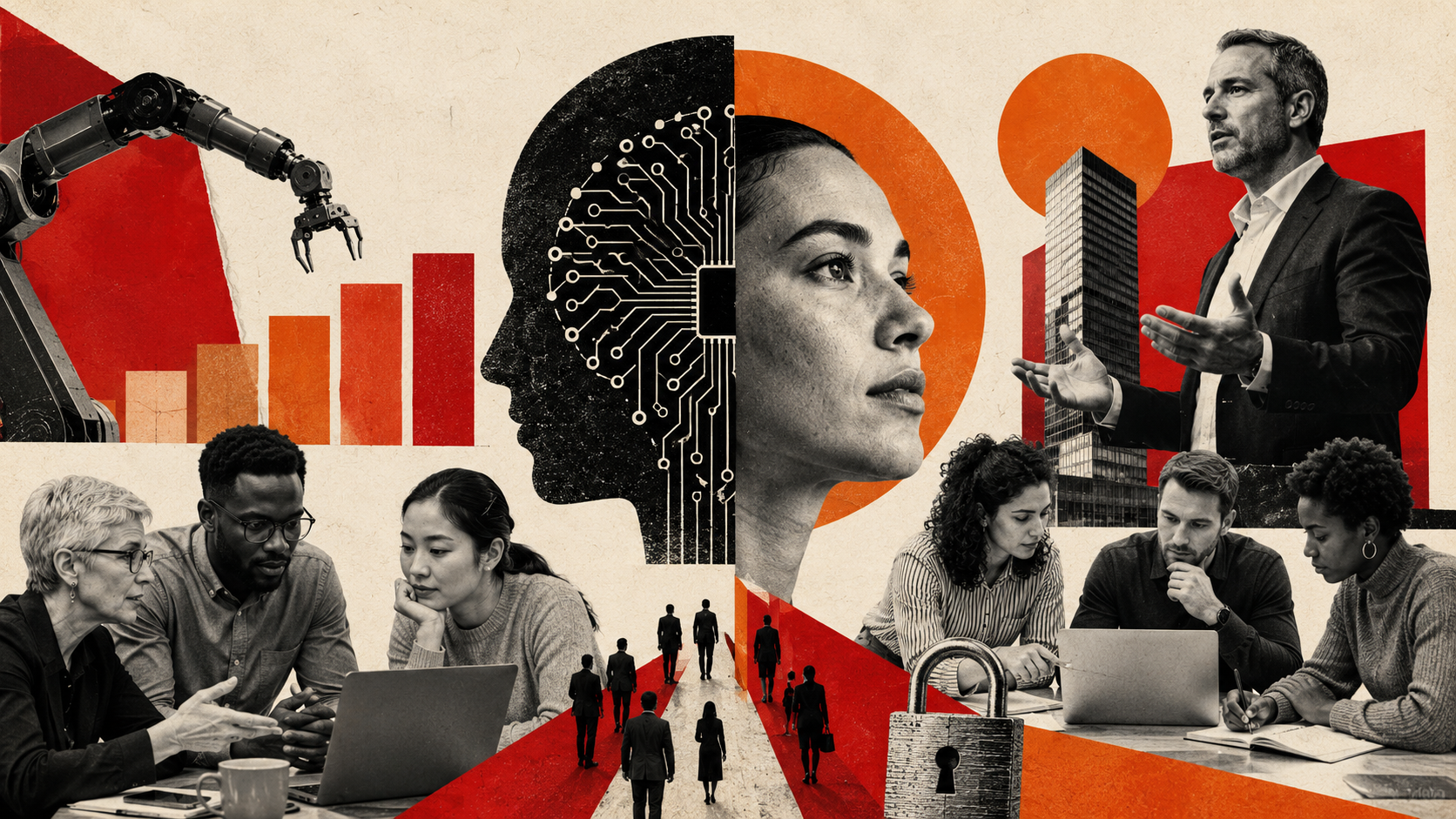
Happy Friday! Get some rest, it's been a long week. :)
You have probably heard the words "we should let the market decide" & known, without anyone spelling it out, exactly whose interests that phrase was protecting. The words sound neutral but they are not. The market isn't some self-governing deity that serves everyone equally.
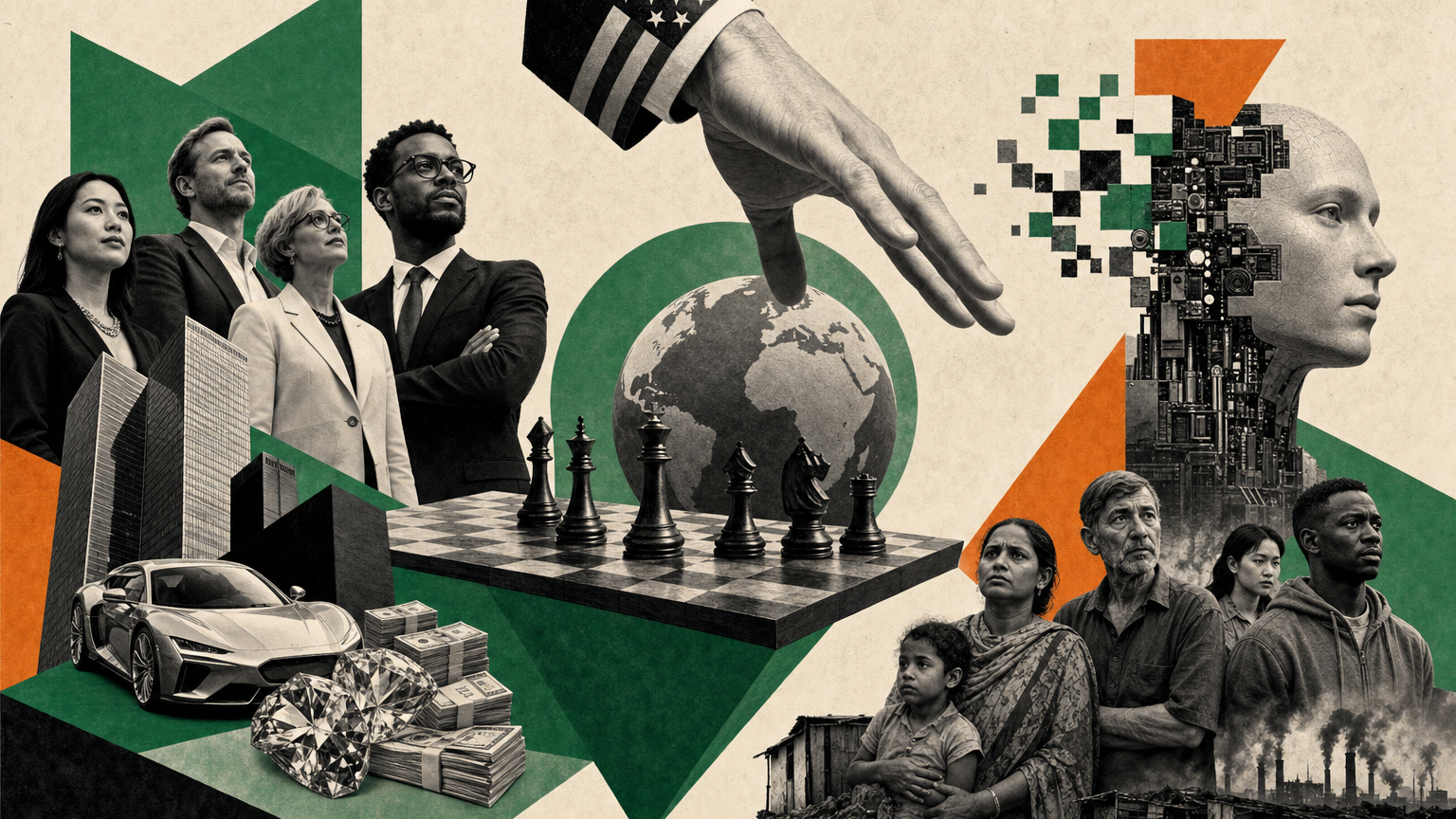
That dynamic just went global. As Yahoo Finance UK reported, the US is preparing to push for a hands-off approach to AI regulation at the G-20 summit. The argument will be the same as it always is: innovation requires freedom, regulation stifles growth, the best thing governments can do is get out of the way. Those claims made in 2026 regarding AI will hold significant weight.
Let's start where we all should with who is actually in the room because often "no one was in the room when it happened" (that's one for the Hamilton lovers). The firms building the most powerful AI systems are the same ones drafting voluntary commitments, staffing advisory panels, & funding the research that shapes policy debate. When the US saunters into the G-20 & argues against binding regulation, it is speaking for (and almost exclusively) American capital. That framing should be taken on face value, because "pro-innovation" & "pro-incumbent" are doing very different work despite being in the same sentence.
Lighter regulation genuinely allows faster development, I don't think anyone would argue that, that doesn't mean it can't be argued that it's not always a good enough point to allow it to happen as it is. Some of what comes from that speed will be useful: medical research & climate modelling. I'm not dismissing those applications. But speed without accountability is externalisation. The costs of ungoverned AI do not vanish because no law was passed no mater what the tech bros tell you. Job displacement without transition support, algorithmic discrimination in public services, training data scraped without consent. All of it lands on people with less power to object as it always does. Both things are true at once: the technology can do real good, & the current push to keep it unregulated is a political choice about who pays when it doesn't.
The G-20 is supposed to be the forum where economies with different priorities and commonalities. A hands-off framework advantages whoever already has the biggest models & the deepest pockets. That's the thing with all technology advancement is it tends to reflect and magnify in inequities always present in our society. That's why I'm always telling people that progress isn't progressive if it is always serving the same people. For countries in the Global South, many already dealing with AI-powered credit scoring, hiring tools, & content moderation systems they had no hand in designing, "don't regulate" is an instruction to accept whatever arrives.
I keep coming back to a pattern I see with senior leaders trying to make sense of AI adoption. The ones who struggle most accepted a vendor's framing of the technology before they understood their own organisation's exposure. They bought the upside story without mapping the downside. A lot of organisations get the AI tools in through the door & they get the people out of the door, & then they've actually lost the knowledge they need to be able to get the most out of the AI tools that they have. Which is why lots of them end up rehiring after making redundancies. That is what is happening at a geopolitical level. The US is selling an upside story to the G-20 & asking everyone to skip the risk assessment.
The honest version of this conversation would start very differently: what do citizens in G-20 countries actually need from AI governance? Probably transparency about how automated decisions affect them, meaningful consent over data use, & recourse when things go wrong. All of that is compatible with a thriving AI sector. Regulation is infrastructure. People can complain about red-tape but if you understood a world underpinned by AI like I do, you wouldn't be letting it get a free ride.
AI isn't the product, it's the infrastructure. Remember that.
Regulation is really important but regulation can only go so far, & regulation is never going to keep up with the rapid changes of technology. The technology is going to evolve faster than the regulation that's designed to regulate it is able to regulate it, & that's going to be incredibly problematic for a lot of organisations. You're going to have to think in advance of some of the leaps that are coming in technology in order to be able to regulate for them. A good place for most organisations to start, because it's one that's implemented & it's one that's going to have an effect, is the EU AI Act. It has a timeline of when things are going to be implemented & how they're going to be enforced, so if you're looking at something for the next few years that would be a good place to be able to start.
There is a word for a system where the entities being governed set the terms of their own governance. The word is capture.
What I suspect will happen is within twelve months, at least two G-20 members outside the US & EU will introduce binding AI procurement rules for public-sector use, specifically because the voluntary framework the US is pushing will have produced no enforceable standards. The signal to watch is whether Brazil or India moves first. Both have active domestic AI policy conversations & political incentives to demonstrate sovereignty over their digital infrastructure. If neither acts by late 2027, I am wrong about the timeline, though I think the direction holds.
What would change my mind is evidence that voluntary commitments from major AI companies have led to independently verifiable changes in deployed systems. I have not seen that yet.
I list displacement, algorithmic discrimination, & scraped data as costs. They all come up in their own way, & they all have different impacts over different aspects of the business, & how the business manages that is always very different. The biggest challenge is that most organisations don't know what they don't know when it comes to AI. They don't know a lot, which means that the problems that AI creates, they don't have the solutions to be able to go & solve them. It has blind spots all around of what's being created, & that is always going to be problematic when you're trying to implement a technology that magnifies aspects of your organisation.
AI is a mirror of your organisation. It is a reflection of everything in it. If your organisation isn't good with its processes, doesn't have good data practices, if the information is stored just with the one person who's been there for 30 years & everybody else works around it, AI is not going to help you fix that. It will only magnify the issues that are there. This is where you need to be building up the skills within your workforce. AI is a hygiene skill, & that's not just being able to type into a chatbot. AI is a much vaster subject than that. It's not just all down to generative AI either. There are aspects of deterministic AI which most organisations haven't even really understood yet.
The leaders I work with who get this right stop waiting for someone else to set the standard & start building real AI literacy across their organisation.
Frequently Asked Questions
Why is the US pushing for less AI regulation at the G-20?
The US position protects the competitive advantage of American AI companies, which currently lead in model development & compute infrastructure. The official argument frames regulation as a barrier to innovation, but the practical effect is that the firms profiting most from AI face fewer binding obligations on safety, labour impact, or data use. The stance reflects a long pattern in American trade policy applied to a new technology.
How does a hands-off AI framework affect countries in the Global South?
It removes the main international mechanism through which those countries could demand transparency or accountability from foreign AI systems. Many Global South nations already deal with AI-powered credit scoring, hiring tools, & content moderation built elsewhere with no local input. A voluntary framework at G-20 level offers no route to challenge how those systems are designed or deployed.
What is regulatory capture & how does it apply to AI?
Regulatory capture is when the entities being governed effectively set the terms of their own governance. In AI, the companies building the most powerful systems are also drafting voluntary commitments, staffing advisory panels, & funding policy research. When those same companies then advocate against binding rules, the result is a governance structure shaped by the interests it is supposed to oversee.
Can strong AI regulation coexist with fast innovation?
Yes. Transparency requirements & recourse mechanisms shape the direction of AI development without preventing it. The framing of regulation as anti-innovation is a lobbying position. Infrastructure like safety standards in aviation or pharmaceuticals exists alongside rapid technical progress in those fields. AI is no different in principle.
What can individual leaders do if global AI rules are still unresolved?
Map where AI systems touch your people & your customers before waiting for international frameworks to arrive. Build internal literacy so that adoption decisions are made by people who understand both capability & exposure. Accepting a vendor's framing of the technology before understanding your own organisation's risk is the single most common mistake I see repeated at senior level.
Jamie Bykov-Brett
Listed as one of Engatica's World's Top 200 Business and Technology Innovators, Jamie is an AI and automation consultant who helps organisations move from curiosity to confident daily use. As founder of Bykov-Brett Enterprises and co-founder of the Executive AI Institute, he designs AI upskilling programmes that have delivered 86% daily adoption rates and a 9.7/10 NPS. His work sits at the intersection of technology implementation and human development, with a focus on responsible governance, practical tooling, and making AI accessible to every level of an organisation.
Get AI Insights Delivered
Practical perspectives on AI adoption and the future of work. No spam.