Companies spent 2025 telling their staff that AI could do the job. Now some of them are quietly ringing those same people back.
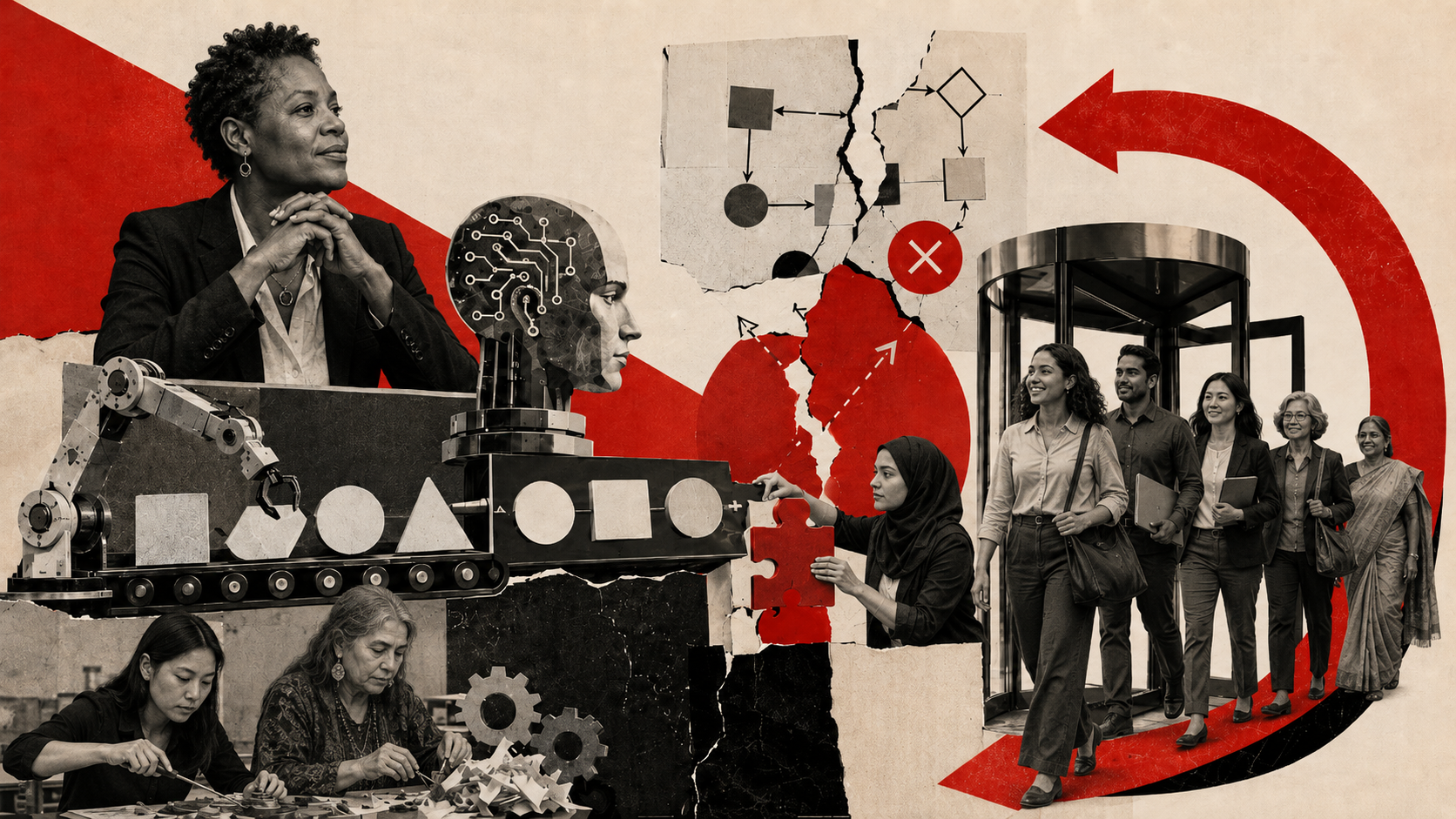
Ford is rehiring hundreds of experienced engineers to fix quality problems its automated systems could not handle. Commonwealth Bank of Australia replaced more than 40 customer service staff with a voice bot, watched call volumes climb because the bot could not cope, then reversed the cuts. IBM swapped much of its HR function for AI, then found the machine choked on the hardest 6% of cases and announced plans to triple its US entry-level hiring in 2026.
That is not a story about AI failing. It is a story about leaders misreading what they were buying.
The number worth carrying into your next planning meeting comes from Orgvue, which found that 39% of business leaders made staff redundant because of AI, and 55% of those now admit the decision was wrong. More than half. These were not reckless firms run by people who do not understand technology. They were organisations that made a specific and very human error: they confused what AI might do one day with what it can reliably do now.
I have sat in enough leadership meetings to recognise the moment this happens. A demo goes well, someone runs the maths on salary savings, and a projection becomes a plan. The tool is judged on its best five minutes, not its worst afternoon. So roles get cut against capability the system has not actually proven, and the people who understood the messy edges of the work walk out of the door with knowledge no model was ever trained on.
Look at what each of these companies was really cutting. Ford did not lose engineers who tighten bolts. It lost the judgement that spots a quality problem an automated check waves through. IBM's AI handled the routine 94% of HR requests, but the remaining 6% included the ethical dilemmas, the cases where a person's circumstances do not fit the form. That 6% is not a rounding error. It is the part of the job that most needed a human, and it was the first thing to break.
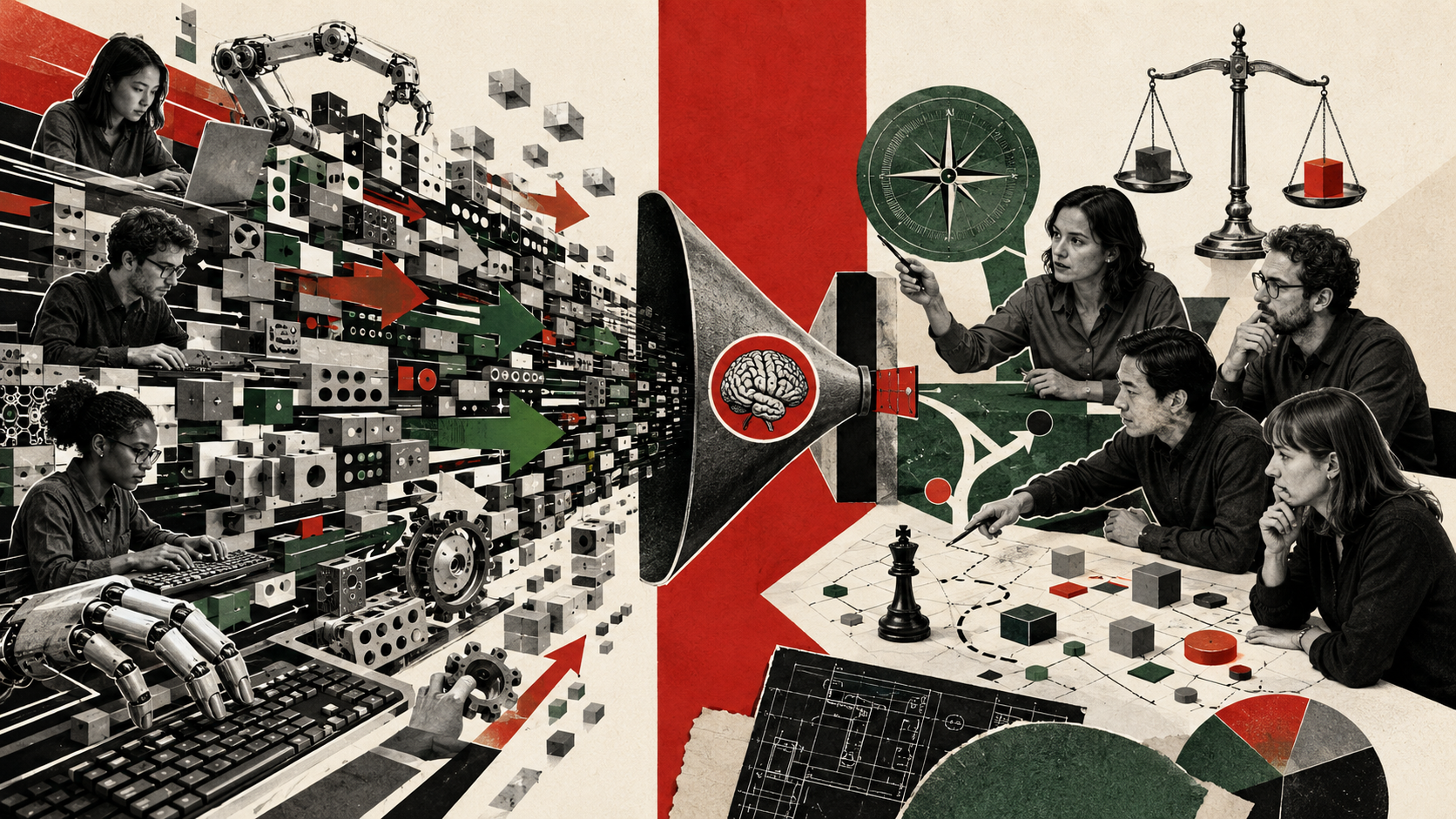
This is the pattern I keep coming back to with the leaders I work with. Machines are now genuinely better than us at the machine-like parts of work: the repetition, the sorting, the first-draft admin. That is real, and pretending otherwise helps no one. But the value of a good employee was never only in the routine. It was in the judgement wrapped around it, the sense of when the standard answer is the wrong one. When you strip out the people to keep the process, you often keep the cheapest part and throw away the expensive one.
The financial logic falls apart faster than the spreadsheets suggested, too. Robert Half told CNBC that 32% of US hiring managers eliminated a role primarily because of AI and later rehired for the same or a similar position. Cut, regret, rehire, usually at a higher salary, with the institutional memory already gone. As ADP's Jessica Zhang put it in the same reporting, reintroducing human oversight after the fact leads to duplicated effort and slower decisions. The saving was a mirage; the disruption was real.
None of this is an argument against adopting AI. It is an argument for adopting it as a leadership decision rather than an accounting one. The firms getting it right are not asking "how many people can this replace?" They are asking a harder question: what work should humans stop doing, what should they do more of, and who needs to be in the loop when the machine reaches the edge of what it knows?
That is a question about capability and trust, not headcount.
Before you sign off on a restructure justified by AI, try one thing. Take the role you are about to cut and name the specific tasks the system has already done well, in production, on a bad day, not in a demo. If you cannot fill that list, you are not automating a job. You are betting institutional knowledge on a projection. IBM's HR chief said it plainly: stop hiring at the entry level and in three to five years the pipeline simply dries up. The well does not refill itself.
Frequently Asked Questions
Why are companies that cut jobs for AI now rehiring people?
Because the AI could not reliably do the full job, only the routine parts of it. Ford, Commonwealth Bank of Australia and IBM all cut roles based on projected AI capability, then found the systems failed on quality issues, complex customer calls and ethical judgement calls. They rehired to restore the human oversight the technology still needs.
How many employers regret making staff redundant because of AI?
According to an Orgvue report cited by CNBC, 39% of business leaders made staff redundant due to AI deployment, and 55% of those admit the decision was wrong. Separately, Robert Half found that 32% of US hiring managers who eliminated a role primarily because of AI later rehired for the same or a similar position.
Does this mean AI cannot replace jobs at all?
No. AI genuinely outperforms humans at repetitive, high-volume, rule-based tasks, and those parts of many roles will change. The mistake is assuming a role is only its routine work. The judgement, edge cases and ethical decisions wrapped around that routine are exactly what these systems still struggle with, and cutting them creates costly gaps.
What should leaders do before cutting roles because of AI?
Separate proven capability from projected capability. List the specific tasks the AI has already handled well in real production conditions, not in a demo. If that list does not cover the whole role, you are automating against a forecast rather than a fact, and you risk losing institutional knowledge you will pay more to rebuild later.
Why is entry-level hiring still important in an AI era?
Because entry-level roles are the pipeline for future expertise, and AI cannot replace that. IBM's chief human resources officer warned that without continued entry-level hiring, in three to five years there is no pipeline and the well dries up. Automating the bottom rung today can leave an organisation with no experienced people to promote tomorrow.
.png?width=783&height=479&name=BBE%20Logo%20Teal%20Background%20(1).png "Bykov-Brett Logo")
 Jamie Bykov-Brett
·
04 July 2026
·
6 min read
Jamie Bykov-Brett
·
04 July 2026
·
6 min read