Apple's head of marketing can tell you with full confidence that the digital and physical worlds will merge. What he cannot tell you is when. In a recent interview, Greg Joswiak said he could not give a timeline for when spatial computing "becomes anything else," only that "you know it's an inevitability". That is an unusually honest thing for a senior Apple executive to say on the record, and it should change how leaders think about immersive-tech budgets this year.
For the last two years, the pitch has been that spatial computing is about to reshape the way we work. The Apple Vision Pro would do for the office what the iPhone did for the pocket. Two years in, Apple sold roughly $157 million worth of Vision Pros in the Christmas 2025 quarter, and analysts have started calling it a rare Apple failure. The device exists. The vision exists. The mass adoption curve does not, and the company behind it is no longer pretending to know when it will.
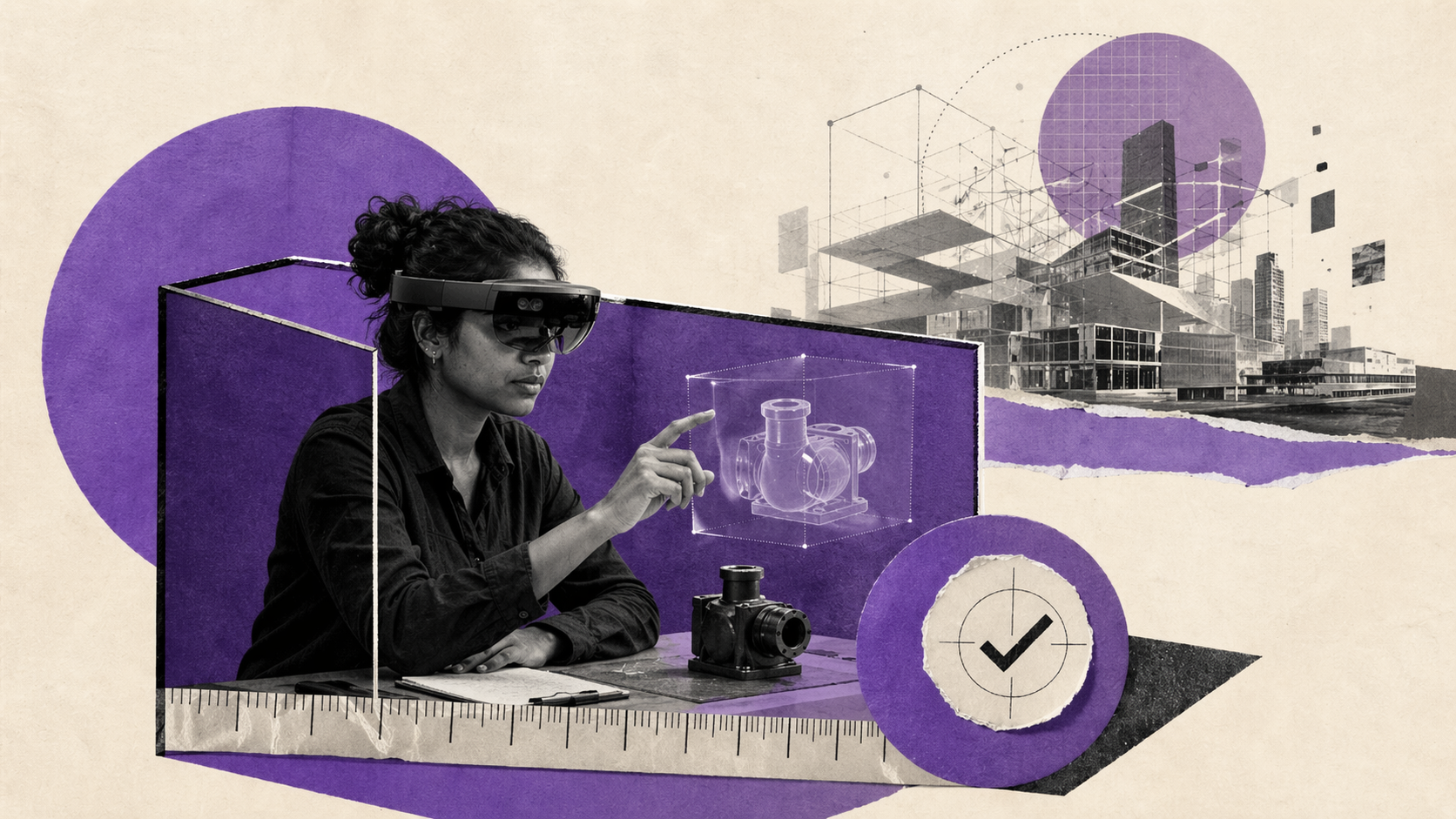
This matters because in the same news cycle you will read genuinely encouraging stories about immersive tech delivering real outcomes. VR used to reduce isolation in senior living. Headset-based rehab protocols cutting recovery times. Digital twins being used to rehearse maintenance on assets that cost millions to take offline. Those stories are real. They are also, without exception, narrow. Specific population, specific workflow, specific measurable outcome.
The gap between "spatial computing will reshape work" and "we reduced training errors on this one procedure by a measurable amount" is the gap between vendor pitch and operational reality. Both things can be true at the same time. The first one just does not help you allocate budget this year.
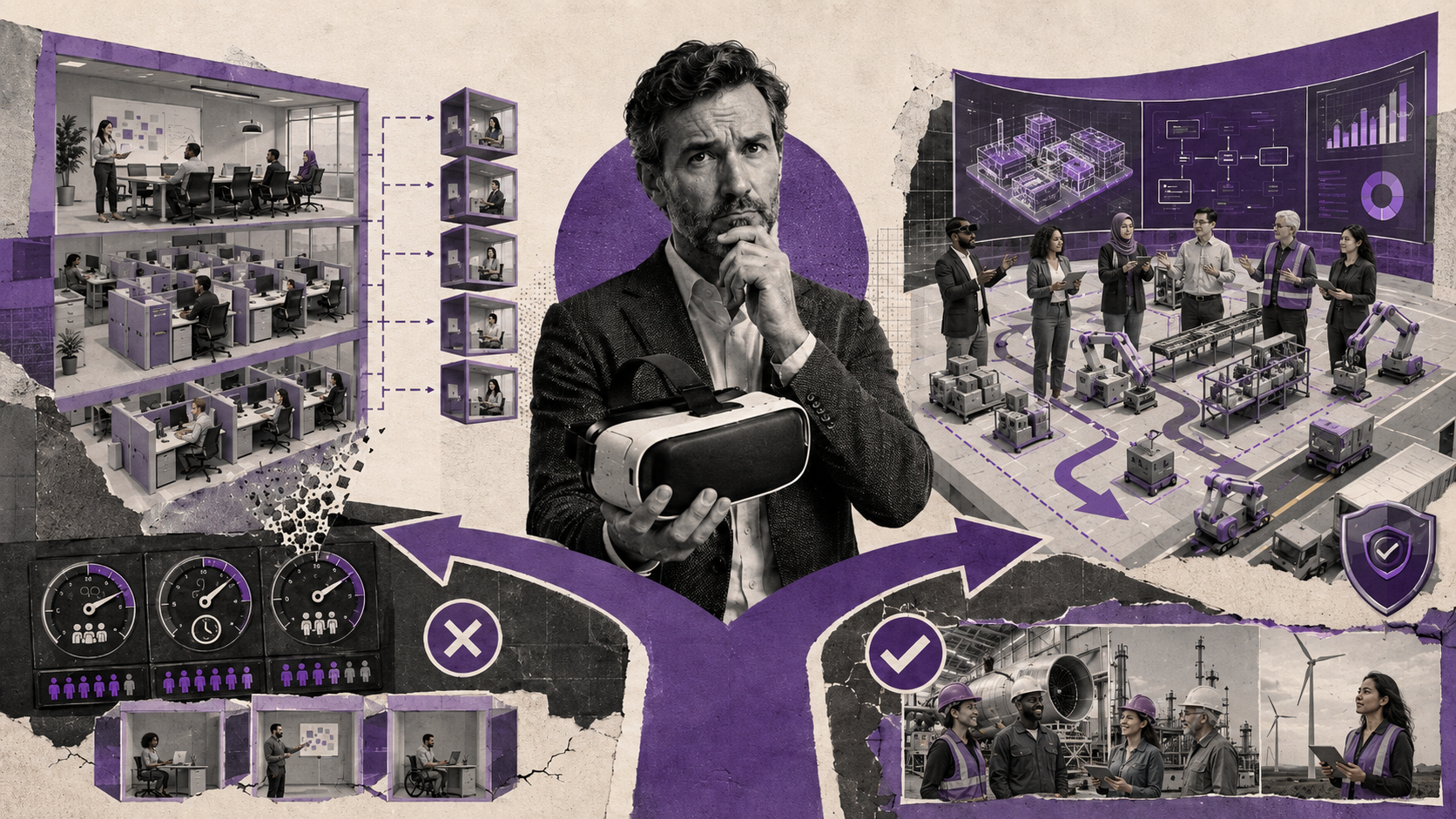
So if you are a Chief Digital Officer or a Head of Learning weighing an immersive-tech investment in the next twelve months, the question worth asking is not "should we get into spatial computing." The question is: is there a specific, bounded human outcome we can improve, and do we have a way to measure whether it actually improved? If yes, pilot it. If the answer is "this will transform how the whole organisation works," put the money somewhere else until the evidence catches up.
A few tests that separate the narrow bets from the hype:
One task, not one technology. The best immersive pilots I have seen across training and clinical environments have a verb at the centre. People are learning to do a specific thing, or rehearsing a specific procedure, or collaborating in a specific moment when physical co-location is not possible. If the pilot is organised around "we bought headsets," it will underperform. If it is organised around "nurses need to rehearse this handover in a safer setting," it tends to land.
A measurable human outcome. Error rate on a procedure. Time to competence. Confidence score before and after. Completion of rehabilitation milestones. The general-purpose spatial computer is being sold on productivity vibes. The narrow use cases are being sold on numbers. Follow the numbers.
Honest containment of scope. If the vendor cannot tell you which users, which task, and which outcome, they are selling you a platform, not a solution. Platforms can be valuable. They are also where immersive-tech budgets go to die when the evangelist leaves the organisation.
The deeper point is one Apple itself keeps making and then forgetting. John Ternus, widely tipped to be the next Apple CEO, said in the same interview that the company never thinks about shipping technology, only about what users can do with it. That is a useful frame to borrow. When a pitch lands on your desk, the first question is not "what can this headset do." It is "what will a specific human being be able to do after this, that they cannot do now, and can we prove it."
Spatial computing will probably get there. Joswiak is likely right that some form of digital and physical convergence is coming. But "inevitability" is not a procurement timeline, and "transformational" is not a use case. The organisations getting value from immersive tech right now are the ones who picked one task, measured the outcome, and ignored the brochure.
One thing to try this quarter: before approving any immersive-tech spend, write the sentence "after this pilot, [specific people] will be able to [specific verb] [specific measurable better]." If you cannot finish the sentence, the pilot is not ready.
.png?width=783&height=479&name=BBE%20Logo%20Teal%20Background%20(1).png "Bykov-Brett Logo")
 Jamie Bykov-Brett
·
22 April 2026
·
5 min read
Jamie Bykov-Brett
·
22 April 2026
·
5 min read