Why Microsoft's Mistral deal is really a question about control, not clever models
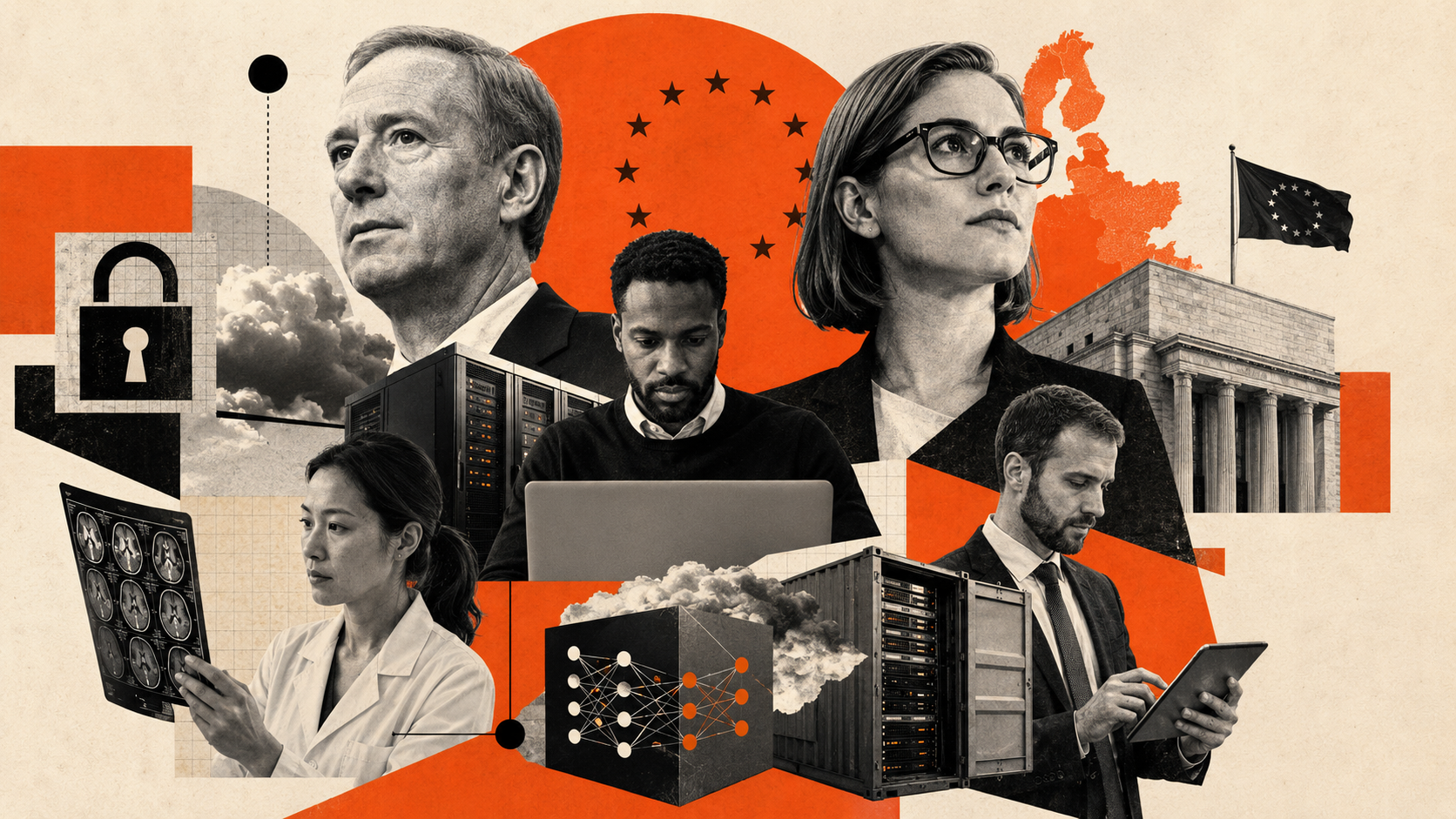
Microsoft pours billions into OpenAI. So it is worth pausing on the fact that it has just expanded a partnership with Mistral, a French company that competes with OpenAI. The reason is not that Mistral has built a smarter model. The reason is where the model can run and who gets to hold the keys.
That is the heart of what people are calling "sovereign AI". Strip away the buzzword and it means something simple: can an organisation use powerful AI without handing over control of its data, its operations, and its ability to keep working if the wider system goes down? For a hospital, a bank, or a government department in Europe, that question is not academic. It decides whether they can use these tools at all.
The detail that caught my eye sits in the deployment options. Customers can run models fully in Microsoft's cloud, or in a controlled setup that only reaches out to the cloud when it has to, or in a fully disconnected environment that operates entirely on its own for the most sensitive work. That third option is the interesting one. It is Microsoft admitting that for some customers, the cloud is not the answer, and that walking away from constant connectivity is a feature rather than a failure.
From my perspective this aligns with their NVIDIA partnership announcement a couple of months ago where they announced advancing PC hardware to run advanced local models. From a Microsoft perspective you can see why this would be beneficial, their AI harness Co-pilot doesn't need to be tied to a cloud model and could run local models, that's something it's competitors like Anthropic and OpenAI can't really offer in the same way Microsoft can as the provider of the operating system.
Brad Smith, Microsoft's vice chair and president, framed it as letting European customers "operate on their own terms" and access capable AI without compromising control over their data, operations or digital future. That is careful language, and it is aimed squarely at regulated industries that have spent years nervous about where their information physically lives.
Does it work as a business move? Gartner's Arun Chandrasekaran reckons the deal strengthens Microsoft's sovereignty messaging and its position in regulated industries, while giving Microsoft a credible European frontier model to add to its shelf. Everyone gets something. Microsoft looks like it respects European rules, Mistral gets scale and Azure credits, and customers get choice.
Here is where I want to slow leaders down, though, because choice is not the same as capability.
I have watched plenty of organisations treat a procurement decision as if it were the finish line. They pick the sovereign option, tick the compliance box, and assume the hard part is done. It is not. A disconnected, locally-run AI environment is only as good as the people who can actually design workflows for it, judge its output, and spot when it is confidently wrong. Sovereignty gives you control over the infrastructure. It does nothing for the judgement of the person sitting in front of it.
This is the gap I keep running into. A finance team can be handed the most private, compliant, on-premise model in Europe and still get poor results, because nobody taught them how to frame a task, check a claim, or decide which decisions a machine should never make alone. Control of your data and confidence in your data are two different problems. The first is a contract. The second is a capability you have to build.
So the useful takeaway from the Mistral news is not "sovereignty has arrived". It is that the market is finally offering leaders real options about where and how AI runs, which means the questions land back on you. Which of your processes genuinely need to run disconnected, and which are you just nervous about? Who in your organisation can tell the difference between a good AI answer and a plausible one? And if you moved a sensitive workflow onto a self-hosted model tomorrow, would your people be equipped to run it, or would you have swapped a data risk for a competence risk?
One thing worth doing this week: take a single high-stakes process you would never put in a public cloud, and ask not "which vendor is sovereign enough" but "do the humans in this process have the skill to supervise a machine doing part of it". If the answer is no, that is where the work is. The infrastructure is catching up faster than the people are, and no partnership announcement fixes that for you.
Frequently Asked Questions
What does "sovereign AI" actually mean?
Sovereign AI means using AI in a way that keeps control of your data, operations, and independence in your own hands rather than a vendor's. In practice it covers where the model physically runs, who can access the underlying information, and whether the system keeps working if you disconnect it from the wider cloud. It matters most for regulated organisations like banks, hospitals, and public bodies.
What did Microsoft and Mistral actually announce?
Microsoft expanded its strategic partnership with the French AI company Mistral, committing to sovereign AI infrastructure, more GPU capacity in Europe, Azure credits, and a joint go-to-market plan. Customers can run models fully in Microsoft's cloud, in a controlled setup that only uses the cloud when needed, or in a fully disconnected environment for the most sensitive work.
Why would Microsoft partner with a rival to OpenAI?
Microsoft backs OpenAI heavily, but the Mistral deal is about control and geography, not raw model quality. Mistral is a credible European frontier model provider, which strengthens Microsoft's sovereignty message with regulated customers who worry about where their data lives. Gartner's Arun Chandrasekaran noted the agreement bolsters Microsoft's position in regulated industries.
Does choosing a sovereign AI option solve my compliance problem?
No. A sovereign or disconnected AI setup gives you control over the infrastructure and data, but it does nothing for whether your people can use it well. You can run the most private, compliant model in Europe and still get poor results if nobody knows how to frame tasks, check output, or judge when a machine should not decide alone.
How do I know if my team is ready to run a self-hosted AI model?
Your team is ready when people can design workflows for the model, judge its output, and reliably spot when it is confidently wrong. Test this on one high-stakes process: ask whether the humans involved can supervise a machine doing part of the work. If they cannot, you have swapped a data risk for a competence risk, and that is where the effort belongs.
.png?width=783&height=479&name=BBE%20Logo%20Teal%20Background%20(1).png "Bykov-Brett Logo")
 Jamie Bykov-Brett
·
25 July 2026
·
7 min read
Jamie Bykov-Brett
·
25 July 2026
·
7 min read