When you ask people what they do with the time an AI tool saves them, the most common answer is not "leave early" or "check my phone". According to survey respondents in a recent AI Work Institute report, it is "improve the quality of my work". That sounds like the dream outcome. The awkward part is that, looking across whole organisations, that quality improvement is not actually showing up.
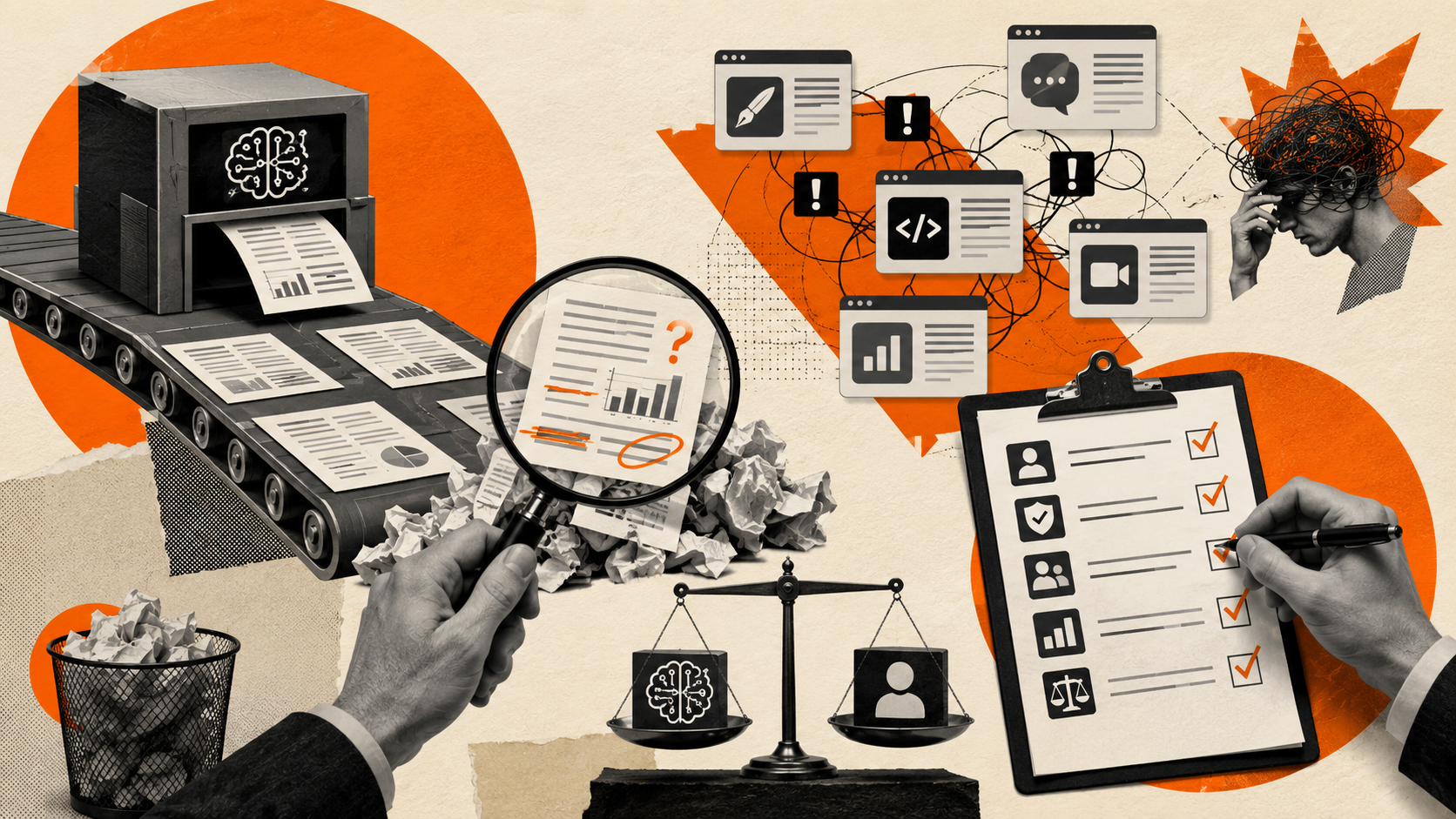
So where is the time going? A good chunk of it goes into something the report calls "botsitting": the hours employees spend checking, correcting and second-guessing what the machine produced. You give someone a tool that drafts a report in ninety seconds, and then they spend forty minutes making sure it has not invented a statistic, misread the brief, or written something they would be embarrassed to put their name to. The work got faster. The job did not.
I see this constantly with teams who roll out a shiny AI tool, watch the login numbers climb, and declare victory. Adoption happened, so the assumption is that productivity followed. But usage data only tells you people opened the thing. It tells you nothing about whether the hours after they opened it were spent well. A team can be fully "adopted" and quietly slower than it was a year ago, because nobody is measuring how the time is actually spent, only whether the tool is being touched.
There is a second leak the report names that is worth knowing about: the "AI toggle tax". This is the friction of jumping between several AI tools to get one job done, with each handover creating more output that nobody has properly verified. When people are juggling a writing assistant, a summariser, a coding helper and a meeting tool, the cracks between them fill up with unchecked work. And as that tool sprawl grows, something more worrying happens. People start to cognitively offload, which is a polite way of saying they stop thinking and let the machine decide, because keeping up with all of it is exhausting.
This is where I tend to get firm with leaders. The problem here is not the technology. The problem is the absence of governance around it. Governance sounds like a dry word for committees and policies, but in practice it means something simple: deciding who is accountable for AI output, what "good enough to ship" looks like, when a human must check the work and when they genuinely do not need to, and how you will know whether any of this is paying off. Hand people powerful tools without that scaffolding and you get exactly what the report describes. Faster production of work nobody fully trusts.
I often put it like this. Machines machine better than people ever could. The danger is when we let the machine do the thinking too, and then spend our newly freed hours nervously babysitting its homework. Poor thinking paired with a powerful tool does not save time. It just produces harm more quickly, with a confident tone and a clean layout.
The fix is less dramatic than most AI strategies. Start measuring the right thing. Not "how many people used the tool this month", but "what did people do with the time it saved, and did the quality of the end result actually improve". If you cannot answer the second half of that question, you do not have a productivity gain. You have a hunch and a subscription cost. Decide, deliberately, which tasks are safe to fully delegate to AI, which need a human in the loop, and which should never have been automated in the first place because the judgement involved is the whole point of the job.
One thing to try this fortnight: pick a single team that adopted an AI tool, and instead of asking them how often they use it, ask them how long they spend correcting it. The honest answer will tell you more about your AI return on investment than any usage dashboard. If the botsitting hours are quietly cancelling out the time saved, that is not a failure of the tool. It is a gap in the governance, and that gap is yours to close.
Frequently Asked Questions
What does "botsitting" actually mean?
Botsitting is the time employees spend checking, correcting and second-guessing AI output instead of doing other work. The AI Work Institute report uses it to explain why expected time savings from AI tools often fail to appear: the hours saved on production get eaten by the hours needed to verify the result is trustworthy.
Why aren't we seeing the productivity gains AI promised?
Often because the time AI frees up is being absorbed by verification, tool-switching and rework rather than higher-value tasks. Survey respondents in the AI Work Institute report said they mostly used saved time to improve quality, yet organisations are not seeing that quality improvement materialise, which suggests the gains are leaking out somewhere along the way.
What is the "AI toggle tax"?
The AI toggle tax is the productivity drain caused by employees switching between multiple AI tools to complete a single job. Each handover between tools generates more output that nobody has properly verified, and as tool sprawl grows, people start offloading their thinking to the machines rather than reviewing the work carefully.
How do I tell whether my team's AI adoption is actually productive?
Measure what people do with the time AI saves them, not just whether they log in. Usage data only proves adoption happened. To know whether it is productive, ask how long people spend correcting AI output and whether the quality of the final result genuinely improved. If you cannot answer that, you have a cost, not a confirmed gain.
Can governance really fix the AI time-savings problem?
Yes, because the root issue is usually missing governance rather than a weak tool. Good governance means deciding who is accountable for AI output, what "good enough to ship" looks like, when a human must review work, and how you will measure the return. Without that structure, powerful tools simply produce untrusted work faster.
.png?width=783&height=479&name=BBE%20Logo%20Teal%20Background%20(1).png "Bykov-Brett Logo")
 Jamie Bykov-Brett
·
29 June 2026
·
6 min read
Jamie Bykov-Brett
·
29 June 2026
·
6 min read