Web 3.0, VR, AR, 5G, blockchain, crypto, NFTs, and other technologies, alongside the rise of remote work and online socialisation, make the metaverse's arrival a relevant and significant development.
The most-used internet platforms and services have become integral to everyday life, yet they are owned by only a handful of tech companies. These companies have shifted from being service providers to gatekeepers, controlling which creators can access their platforms, deciding who reaches the widest audience, and determining who can build a career from their work.
We are in the early stages of the metaverse's development, but this is where we could realise what many people always hoped the internet would be: a place where you benefit from your participation online. The alternative is to replicate the same models that currently govern our online world, only in 3D.
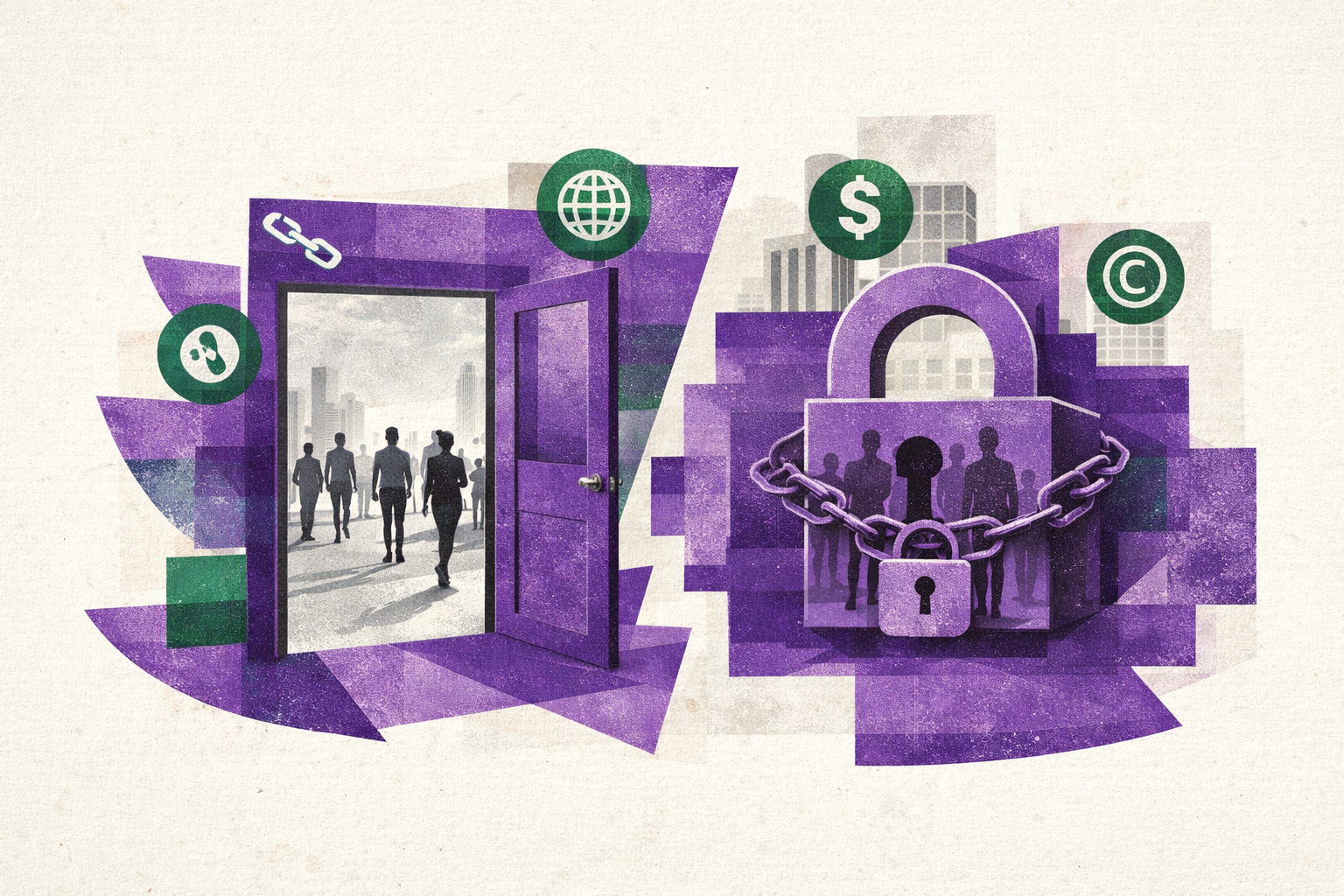
These competing visions are referred to as an 'open' and 'closed' metaverse.
A closed metaverse has a fixed infrastructure, controlled by a single organisation or government. Several businesses have announced they are building their own metaverses, committing significant financial resources, talent, and expertise. Many tech companies don't just want to build the metaverse, they want to own it.
Web3 and digital economic justice advocates argue that the often exploitative Web2 model of digital governance has had its day. They believe people should be supporting the pursuit of an open metaverse instead.
There are many definitions of an open metaverse. The one used here draws from what I consider the most impactful:
"An open metaverse would be a virtual version of our material world with no predetermined physics. It would be decentralised, community-owned, community-governed, and freely interoperable, with privacy built-in."
From a Web3 perspective, the metaverse must be a shared space. Were a single entity to become the dominant gatekeeper, it would hold power greater than any tech company currently wields.
The hope for many is that the metaverse will be built on Web3 principles, decentralised, as opposed to being governed by governments and companies as the internet is today. Many working in metaverse spaces believe it needs to be a place where creators and users actually own their content and data, rather than placing control in the hands of a select few.
The successful vision of the metaverse will ultimately be decided by you, the end user. You'll vote with where, how, and in what kind of metaverse you choose to participate, as well as through consumer spending power. It is up to you to insist that it is built on decentralised Web3 principles.
.png?width=783&height=479&name=BBE%20Logo%20Teal%20Background%20(1).png "Bykov-Brett Logo")
 Jamie Bykov-Brett
·
12 July 2022
·
2 min read
Jamie Bykov-Brett
·
12 July 2022
·
2 min read