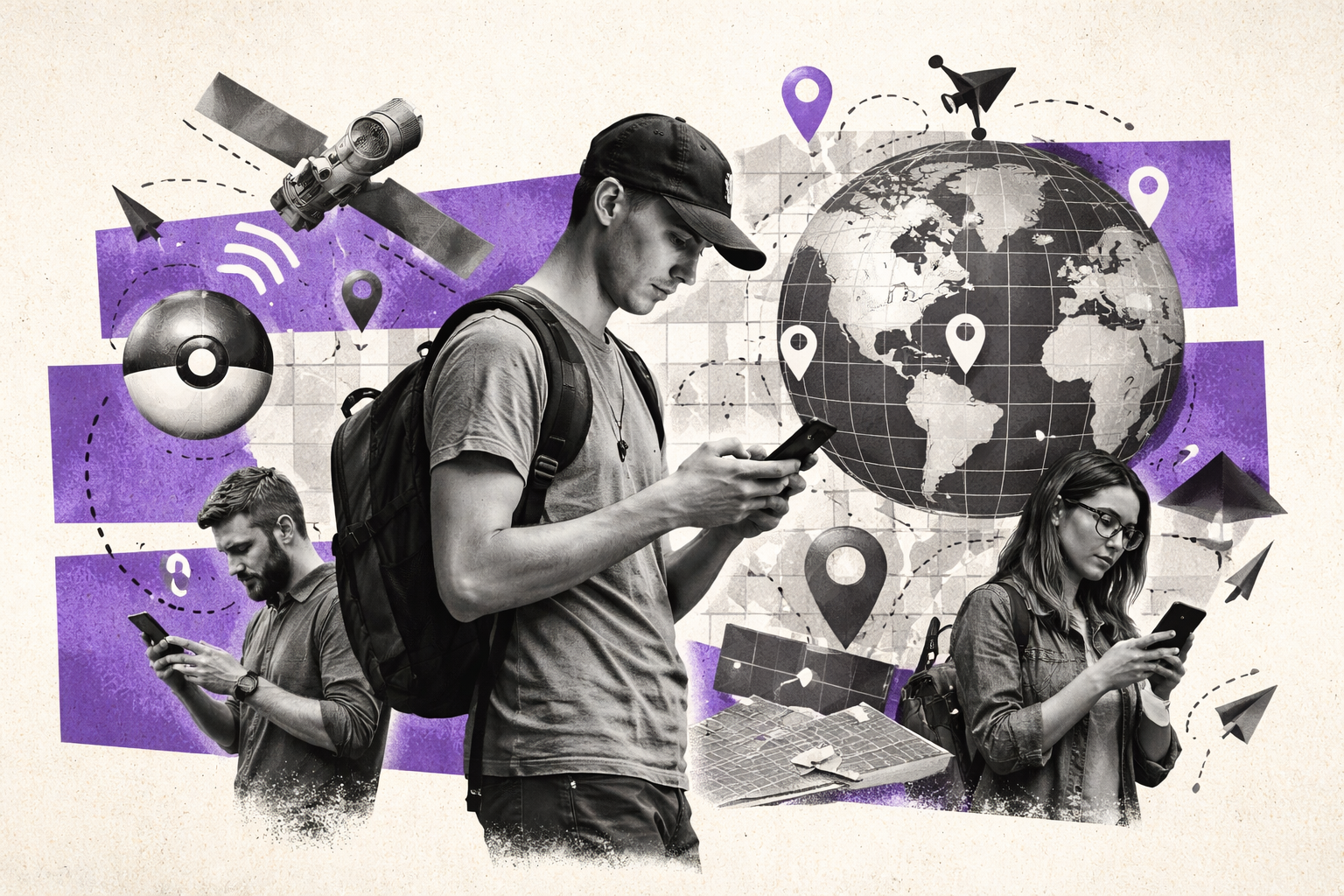
Niantic has pulled a move so devious it could have come straight out of the Team Rocket playbook.
Picture this: you're wandering through a city street, smartphone in hand, chasing a digital creature that exists only in pixels and imagination. What appears to be an innocent game is actually a brilliantly disguised geographical surveillance operation that has transformed millions into unwitting cartographers.
PokémonGO isn't merely an augmented reality game, it's a masterclass in data harvesting. Niantic has constructed a platform where players voluntarily map intricate urban landscapes, community spaces, and hidden geographical nuances, all while believing they're simply catching virtual monsters.
Every tap, every walk, every journey becomes a data point. Players meticulously document public spaces, landmarks, and movement patterns without realising they're contributing to an unprecedented global mapping project. The game mechanics are so cleverly designed that participants perceive effort as entertainment, not labour.
Consider the scale: millions of users worldwide, collectively generating location data more comprehensively and cost-effectively than traditional surveying methods. Each PokéStop represents not just a digital landmark, but a precisely geo-tagged location recorded by enthusiastic players who are effectively working for free.
The ethical implications are profound. Users are essentially unpaid data collectors, transforming personal recreation into corporate intelligence. Their movements, preferences, and geographical interactions are continuously tracked and analysed, all disguised under the veneer of playful engagement.
What makes this particularly fascinating is the voluntary nature of participation. Players aren't coerced; they're willingly providing sophisticated geographical insights in exchange for digital entertainment. Niantic has successfully gamified data collection, turning surveillance into a global, addictive experience.
This raises critical questions about digital consent, privacy, and the increasingly blurred boundaries between entertainment and information gathering. Are we conscious participants or unwitting subjects in a grand data experiment?
The next time you chase a Pikachu down a street, remember: you're not just playing a game. You're contributing to a complex, global mapping infrastructure that extends far beyond catching digital creatures.
.png?width=783&height=479&name=BBE%20Logo%20Teal%20Background%20(1).png "Bykov-Brett Logo")
 Jamie Bykov-Brett
·
21 November 2024
·
2 min read
Jamie Bykov-Brett
·
21 November 2024
·
2 min read