The metaverse is a shared, virtual, interactive space where people can meet, socialise, and work. It is an immersive, 3D environment in which people communicate through avatars or text-based chat. It represents the next generation of the web, one that lets users create their own experiences by interacting with the environment around them.
There are many different visions for the metaverse. For the purposes of this article, we define it as a virtual version of our material world with no predetermined physics. The vision of an 'open metaverse' would be community-owned, community-governed, and freely interoperable, with privacy built in.
This article explores why it matters to build an inclusive metaverse, how we might go about creating one, and what its impact could be on society.
Why building an inclusive metaverse matters
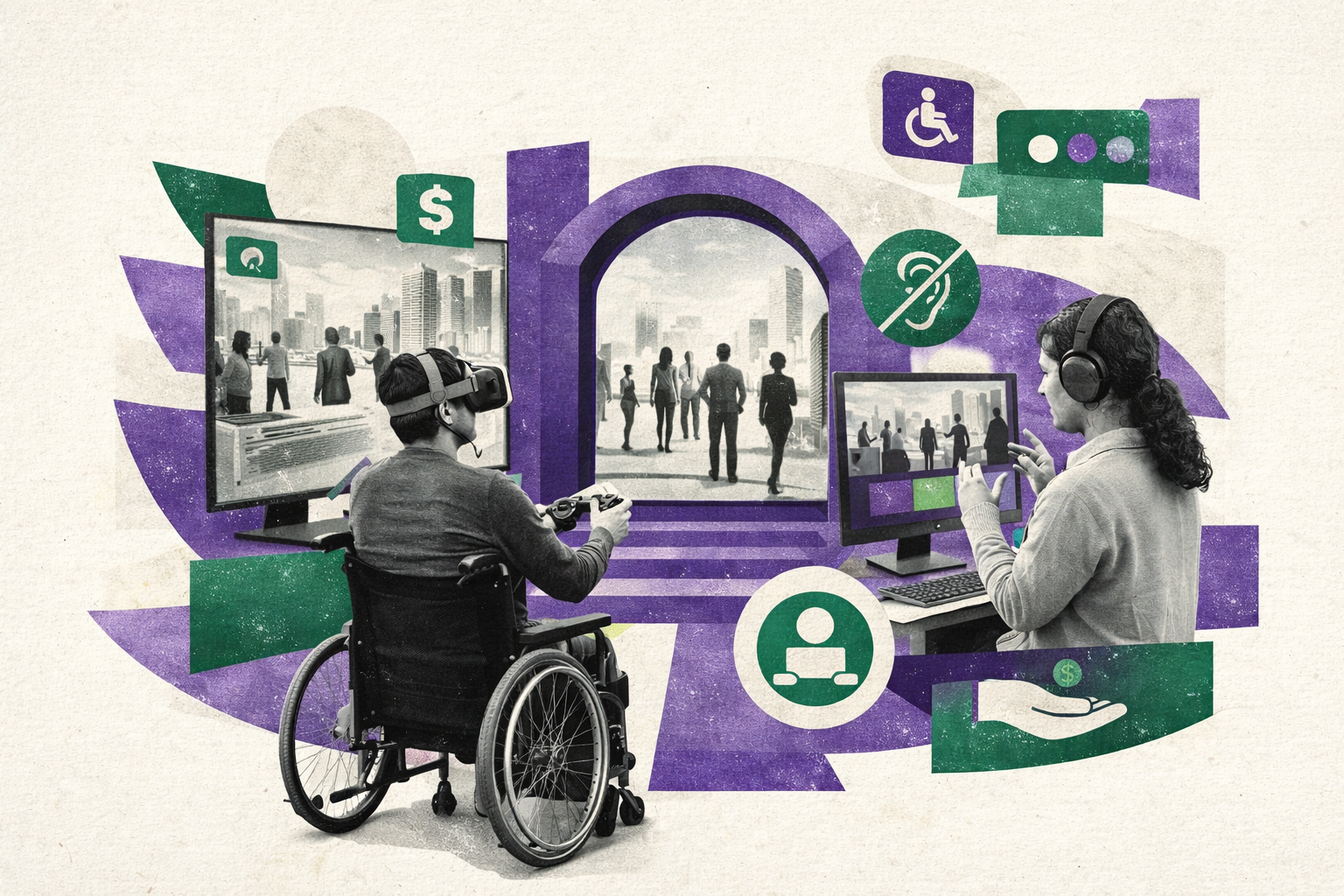
An inclusive metaverse means everyone has equal access to its benefits, be it accessibility or affordability. This is particularly important for disabled people or those with chronic illnesses that may prevent them from accessing physical spaces.
Inclusion is a fundamental part of any society's success, it means ensuring equal access to resources and opportunities regardless of ability or circumstance. An inclusive metaverse also benefits those who lack the time or money to travel for entertainment or connection. Building it well means building it for everyone.
How to create an inclusive and accessible metaverse
As our material and virtual worlds intersect further, the gap widens between those who can participate in virtual spaces and those who cannot. These new inequalities compound existing social ones, carrying pre-existing differences in human capital into virtual settings.
Progress that only considers those already best placed to participate is not progress at all. It is imperative that we address accessibility so everyone can benefit from the development of the metaverse.
The greatest opportunity here is to evolve participation in society by targeting the socio-economic barriers that inhibit access to virtual spaces, including:
- Attitudinal barriers
- Technological barriers
- Financial barriers
- Social barriers
- Enablement and policy barriers
The impact of an inclusive metaverse
The metaverse is a shared, 3D virtual space explored and shaped by multiple users simultaneously. It could function like a virtual city, not of buildings and streets, but of customisable avatars and shared experiences.
It will be a place to learn new skills, build relationships, and share experiences. It could also serve as a platform for finding work or applying for jobs. People can contribute in different ways, some will build avatars, others will focus on infrastructure, but everyone has a role in making it safe and enjoyable for all.
Inclusion matters in the metaverse for two reasons. First, it enables greater diversity, ensuring that varied groups are represented within metaverse communities. Second, people who feel included have better experiences, they feel valued as human beings rather than reduced to digital avatars.
All people should have a voice and be treated equally, regardless of background or circumstance. The metaverse is an opportunity to build not only more inclusive versions of existing systems, but entirely new ones that enrich the educational, emotional, and social experiences of users.
If you'd like to learn more, you can watch my recent webinar at the bottom of this article, it offers useful frameworks, models, and perspectives to consider throughout the development of the metaverse and Web 3.0, in pursuit of a kinder, more ethical, and more inclusive digitally-enabled future.
.png?width=783&height=479&name=BBE%20Logo%20Teal%20Background%20(1).png "Bykov-Brett Logo")
 Jamie Bykov-Brett
·
31 March 2022
·
3 min read
Jamie Bykov-Brett
·
31 March 2022
·
3 min read